What is this article about?
Discover the thrilling story of SpaceX Crew-5's safe return, NASA's early return decision, and its impact on future space exploration. Read more now!What does it take to bring astronauts safely back to Earth while paving the way for the future of space exploration? The story of SpaceX Crew-5 holds the answers.
Key Takeaways
- The SpaceX Crew-5 mission successfully concluded with a safe splashdown off the coast of Florida, marking another milestone in space exploration.
- NASA’s decision to order an early return for the crew highlights the dynamic nature of space missions and the importance of adaptability to ensure astronaut safety.
- The Crew-5 mission, part of NASA’s Commercial Crew Program, achieved key objectives, including conducting over 200 scientific experiments, maintaining and upgrading the ISS, and demonstrating the reliability of SpaceX’s Crew Dragon spacecraft.
- Notable achievements of the mission include the inclusion of cosmonaut Anna Kikina, the first Russian to fly on a U.S. spacecraft since 2002, and advancements in areas such as 3D printing in space, plant growth studies, and human physiology research.
- The mission’s success underscores the importance of public-private partnerships, with NASA and SpaceX combining resources and expertise to advance space exploration.
- The Crew Dragon capsule, named Endurance, demonstrated cutting-edge technology, including heat shield protection, parachute systems, and automated navigation for a safe return.
- NASA’s early return decision was influenced by factors such as weather conditions, technical considerations, crew health, and mission objectives, showcasing a rigorous decision-making process.
- The mission provided valuable data on long-duration spaceflight, ISS operations, and international cooperation, paving the way for future missions to the Moon, Mars, and beyond.
- The success of Crew-5 highlights the reliability of reusable spacecraft technology, reducing costs and enabling more frequent missions.
- The collaboration between NASA and SpaceX continues to inspire the next generation of scientists, engineers, and explorers, driving innovation and public interest in space exploration.
- Future missions, including NASA’s Artemis program and SpaceX’s Mars exploration plans, will build on the achievements of Crew-5, advancing humanity’s presence in space.
Table of Contents
Introduction: The Safe Return of SpaceX Crew-5
In a thrilling conclusion to their mission, SpaceX Crew-5 has safely splashed down off the coast of Florida, marking another successful chapter in space exploration. This remarkable event comes after NASA’s unexpected decision to order an early return for the crew, adding an element of urgency to their homecoming.
The successful splashdown of SpaceX Crew-5 is more than just a routine space operation. It represents a significant milestone in the ongoing collaboration between NASA and SpaceX, showcasing the capabilities of modern space technology and the expertise of those who operate it. As we witness these achievements, it’s clear that we’re living in an era of unprecedented advancements in space exploration.
NASA’s decision to bring the crew back earlier than initially planned was not made lightly. While the exact reasons for this early return are still being analyzed, it underscores the dynamic nature of space missions and the need for flexibility in the face of changing circumstances. This adaptability is crucial in ensuring the safety of astronauts and the success of space missions.
The Crew-5 mission, like its predecessors, has played a vital role in advancing our understanding of space and pushing the boundaries of human exploration. During their time aboard the International Space Station (ISS), the crew conducted numerous scientific experiments, performed maintenance tasks, and gathered valuable data that will contribute to future space missions.
As we celebrate the safe return of SpaceX Crew-5, it’s important to reflect on the significance of this mission in the broader context of space exploration. Each successful launch and return brings us one step closer to realizing ambitious goals such as establishing a permanent presence on the Moon, sending humans to Mars, and unlocking the mysteries of our solar system.
The collaboration between NASA and SpaceX continues to demonstrate the power of public-private partnerships in advancing space technology. SpaceX’s reusable rocket technology, combined with NASA’s extensive experience and resources, has opened up new possibilities for more frequent and cost-effective space missions.
As we look to the future, the successful completion of the Crew-5 mission serves as an inspiration for the next generation of scientists, engineers, and explorers. It reminds us of the incredible achievements that are possible when human ingenuity, technological innovation, and unwavering determination come together.
In the following sections, we’ll delve deeper into the details of the SpaceX Crew-5 mission, explore the reasons behind NASA’s decision for an early return, and examine the implications of this mission for future space exploration endeavors. Join us as we unravel the exciting story of SpaceX Crew-5 and its safe return to Earth.
Understanding the SpaceX Crew-5 Mission
The SpaceX Crew-5 mission marked another significant milestone in space exploration, showcasing the ongoing collaboration between NASA and SpaceX. This mission, part of NASA’s Commercial Crew Program, aimed to further our understanding of life in space and conduct crucial scientific experiments aboard the International Space Station (ISS).
Mission Objectives and Goals
The primary objectives of the Crew-5 mission included:
- Advancing scientific knowledge through various experiments
- Maintaining and upgrading the ISS
- Demonstrating the reliability of SpaceX’s Crew Dragon spacecraft
- Furthering international cooperation in space exploration
One of the key goals was to conduct over 200 scientific experiments and technology demonstrations. These ranged from studies on human health in space to tests of new technologies for future deep space missions.
Key Milestones and Achievements
The Crew-5 mission achieved several notable milestones during its time in space:
- Successful Launch: The mission launched on October 5, 2022, marking SpaceX’s fifth operational crewed flight to the ISS.
- Record-Breaking Crew Member: The mission included cosmonaut Anna Kikina, the first Russian to fly on a U.S. spacecraft since 2002, highlighting international cooperation in space.
- Extended Mission Duration: The crew spent nearly six months aboard the ISS, conducting numerous experiments and maintenance tasks.
- Spacewalks: Crew members performed several spacewalks to upgrade and maintain the station’s exterior systems.
- Scientific Breakthroughs: The mission contributed to advancements in areas such as 3D printing in space, plant growth studies, and human physiology research.
Integrating Space Technology
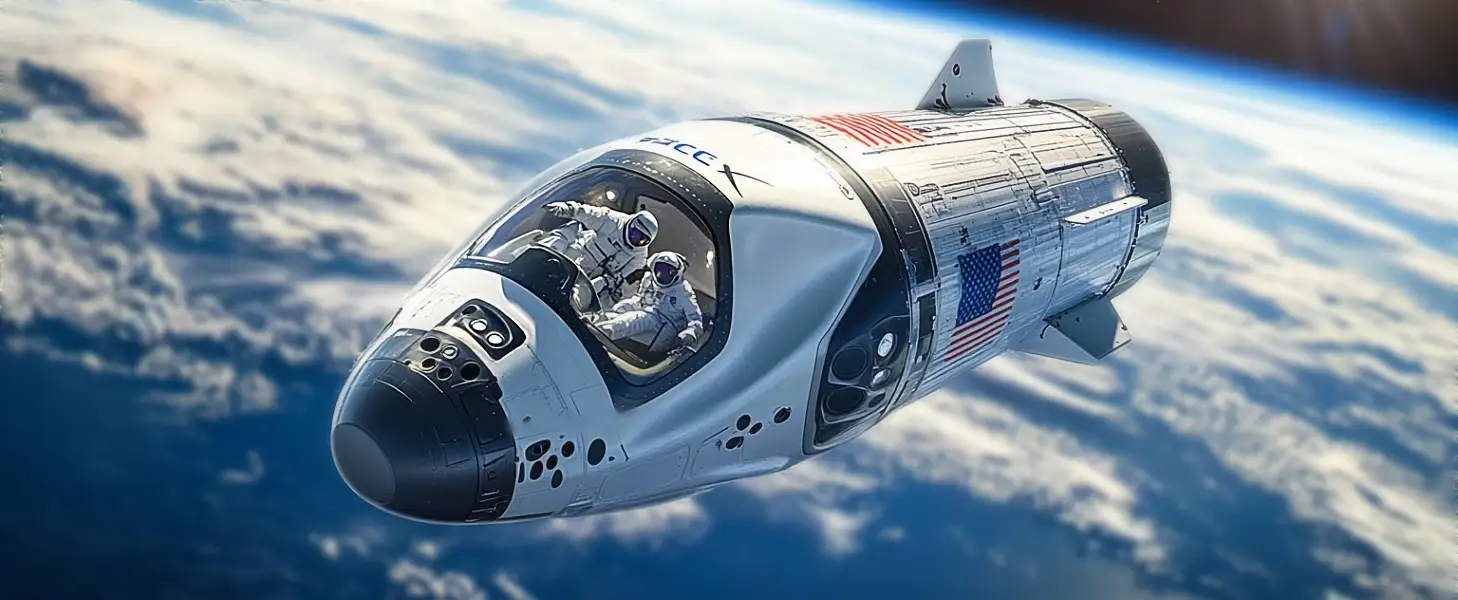
The Crew-5 mission showcased SpaceX’s cutting-edge spacecraft technology. The Crew Dragon capsule, named Endurance, demonstrated its reliability and efficiency throughout the mission. This success further solidified SpaceX’s position as a key player in space exploration and transportation.
Impact on Space Exploration
The achievements of the Crew-5 mission have significant implications for future space exploration:
- Advancing Long-Duration Spaceflight: The extended stay on the ISS provided valuable data on the effects of long-term space habitation on human health.
- Improving Space Station Operations: The maintenance and upgrades performed during the mission ensure the ISS remains a viable platform for future research and exploration.
- Fostering International Cooperation: The inclusion of an international crew member underscores the importance of global collaboration in space exploration.
- Paving the Way for Future Missions: The success of Crew-5 builds confidence in SpaceX’s ability to support more ambitious missions, including potential trips to the Moon and Mars.
Conclusion
The SpaceX Crew-5 mission represents a significant chapter in the ongoing story of human space exploration. Its success not only advanced scientific knowledge but also demonstrated the growing capabilities of commercial spaceflight. As we look to the future, the achievements of Crew-5 serve as a stepping stone towards more ambitious goals in space exploration, inspiring the next generation of scientists, engineers, and explorers.
The safe return of the Crew-5 astronauts marks the end of another successful mission, but it’s just the beginning of the exciting developments we can expect in the realm of space exploration. Stay tuned for more SpaceX news and NASA SpaceX updates as humanity continues its journey to the stars.
The Rationale Behind NASA’s Early Return Order
The decision by NASA to order the early return of the SpaceX Crew-5 mission has sparked curiosity and speculation within the space community. This unexpected move has raised questions about the factors that led to this crucial decision and its potential implications for future missions. Let’s delve into the reasons behind NASA’s early return order and explore the decision-making process involved.
Factors Influencing the Early Return
Several factors likely contributed to NASA’s decision to bring the Crew-5 mission back to Earth ahead of schedule:
- Weather Conditions: One of the primary considerations for any splashdown is the weather at the landing site. NASA closely monitors weather patterns and may have identified a favorable window for an earlier return, ensuring the safety of the crew and recovery teams.
- Technical Considerations: Although no specific technical issues were reported, NASA might have detected minor anomalies or potential concerns that warranted an earlier return as a precautionary measure.
- Mission Objectives: If the primary objectives of the Crew-5 mission were completed ahead of schedule, NASA may have seen an opportunity to optimize resources by bringing the crew back early.
- Crew Health and Well-being: The physical and mental health of astronauts is paramount. If any health concerns arose or if the crew showed signs of fatigue, an early return could have been deemed necessary.
- Upcoming Mission Preparations: The early return might be linked to preparations for future missions, allowing NASA to reallocate resources or begin preparations for the next crew rotation sooner than initially planned.
The Decision-Making Process
NASA’s decision to order an early return involves a complex and thorough decision-making process:
- Data Analysis: NASA continuously monitors various parameters throughout the mission, including spacecraft systems, crew health, and environmental factors. Any anomalies or trends in this data could trigger discussions about an early return.
- Risk Assessment: A comprehensive risk assessment is conducted, weighing the potential benefits of an early return against any associated risks. This includes evaluating the readiness of recovery teams and the reliability of weather forecasts.
- Consultation with Experts: NASA consults with a wide range of experts, including flight directors, medical professionals, engineers, and meteorologists, to gather diverse perspectives on the situation.
- Coordination with SpaceX: As the commercial partner responsible for the Crew Dragon spacecraft, SpaceX is closely involved in discussions regarding mission timelines and return procedures.
- Final Authorization: The ultimate decision to order an early return likely involves high-level NASA officials, including the NASA Administrator and the managers of the Commercial Crew Program.
Potential Implications of the Early Return
The decision to bring Crew-5 back early could have several implications:
- Future Mission Planning: This early return might influence the scheduling and duration of future crew rotations to the International Space Station (ISS).
- Public Perception: NASA’s decision could impact public perception of the safety and reliability of commercial crew missions. Clear communication about the reasons for the early return is crucial to maintain public trust.
- Scientific Research: An early return might affect ongoing scientific experiments on the ISS, potentially requiring adjustments to research timelines or data collection procedures.
- Cost Considerations: While an early return might lead to some cost savings in terms of mission support, it could also incur additional expenses related to rescheduling and reorganizing ground operations.
- Crew Training and Readiness: The early return might impact the training schedules and readiness preparations for upcoming crews, potentially requiring adjustments to ensure smooth transitions between missions.
In conclusion, NASA’s decision to order the early return of SpaceX Crew-5 demonstrates the agency’s commitment to safety and adaptability in space exploration. By carefully weighing various factors and following a rigorous decision-making process, NASA ensures that the well-being of astronauts and the success of the mission remain top priorities. As we continue to push the boundaries of space exploration, such decisions highlight the dynamic nature of space missions and the importance of flexibility in responding to changing circumstances.
Splashdown: A Detailed Look at the Crew-5’s Return
The SpaceX Crew-5 mission reached its thrilling conclusion with a successful splashdown, marking a critical milestone in space exploration. This event not only ensured the mission’s success but also demonstrated the advanced capabilities of modern spacecraft technology.
The Splashdown Event
The SpaceX splashdown is a pivotal moment in any space mission, representing the final and perhaps most crucial phase of the journey. As the Crew Dragon spacecraft re-entered Earth’s atmosphere, it faced extreme temperatures and forces, making precision and timing paramount.
The capsule’s trajectory was carefully calculated to bring it down in a predetermined area of the Gulf of Mexico, off the coast of Florida. This location was chosen for its calm waters and proximity to recovery teams, ensuring a swift and safe retrieval of the astronauts.
Advanced Safety Measures

🔎 Want to browse the web privately? 🌎 Or appear as if you're in another country?
Get for FREE PureVPN with this special ICZ offer.

SpaceX and NASA implemented a range of cutting-edge safety measures to protect the crew during their descent:
- Heat Shield Technology: The spacecraft’s heat shield, made of PICA-X material, protected the astronauts from temperatures reaching up to 3,500 degrees Fahrenheit during re-entry.
- Parachute System: A series of parachutes deployed in stages to slow the capsule’s descent. The main chutes, made of Zylon material, are designed to withstand incredible forces and ensure a gentle splashdown.
- Automated Systems: The SpaceX rocket and capsule utilized advanced automated systems to control the descent, adjusting for any unexpected conditions.
- Abort Capabilities: Throughout the mission, including during splashdown, the spacecraft maintained the ability to abort and seek an alternative landing site if necessary.
Splashdown Technology
The technology employed during the splashdown phase is a testament to the advancements in spacecraft development:
- Precision Navigation: GPS and inertial measurement units guided the capsule to its exact splashdown coordinates.
- Communication Systems: Constant communication was maintained between the spacecraft, mission control, and recovery teams, ensuring real-time updates and immediate response to any issues.
- Buoyancy Control: The capsule was equipped with a system to maintain proper orientation in the water, keeping the crew safe and comfortable until recovery.
- Recovery Vessels: SpaceX’s recovery ship, equipped with state-of-the-art medical facilities and crane systems, was positioned nearby to quickly retrieve the capsule and crew.
The Importance of a Successful Splashdown
A successful splashdown is crucial for several reasons:
- Crew Safety: It ensures the safe return of astronauts after their mission in space.
- Mission Completion: It marks the official end of the space mission, allowing for the collection of valuable data and samples.
- Reusability: A gentle splashdown helps preserve the spacecraft for potential future missions, aligning with SpaceX’s goal of reusable space technology.
- Public Confidence: Successful splashdowns build trust in space exploration programs and encourage continued support for future missions.
The SpaceX Crew-5 splashdown showcased the remarkable progress in space technology and the collaborative efforts of SpaceX and NASA. As we continue to push the boundaries of space exploration, events like these serve as stepping stones towards more ambitious goals, such as long-duration missions to Mars and beyond.
By combining advanced safety measures, cutting-edge technology, and meticulous planning, SpaceX and NASA have set a new standard for space travel. The successful return of Crew-5 not only marks another achievement in the annals of space exploration but also paves the way for future missions, inspiring the next generation of scientists, engineers, and explorers to reach for the stars.
The Broader Impact on Space Exploration Efforts
The successful completion of the SpaceX Crew-5 mission marks another significant milestone in the ongoing journey of space exploration. This achievement not only demonstrates the capabilities of modern spacecraft but also highlights the importance of collaboration between government agencies and private companies in pushing the boundaries of what’s possible in space.
Advancing Space Missions
The Crew-5 mission has contributed substantially to the larger landscape of space exploration. By safely transporting astronauts to and from the International Space Station (ISS), SpaceX and NASA have further solidified the viability of commercial space travel. This mission has provided valuable data and experience that will inform future space missions, potentially paving the way for more ambitious projects such as lunar exploration or even Mars missions.
Some key contributions of the Crew-5 mission include:
- Demonstrating the reliability of reusable spacecraft technology
- Conducting various scientific experiments in microgravity
- Testing new space technologies and systems
- Gathering data on long-duration space travel effects on human physiology
These advancements are crucial for the continued progress of space exploration efforts, as they provide the foundation for more complex and far-reaching missions in the future.
NASA and SpaceX Collaboration
The Crew-5 mission is a shining example of the fruitful partnership between NASA and SpaceX. This collaboration has been instrumental in achieving several key objectives in space exploration. By combining NASA’s extensive experience and resources with SpaceX’s innovative approach and cutting-edge technology, the two organizations have created a synergy that is propelling space exploration forward at an unprecedented pace.
Some notable aspects of this collaboration include:
- Cost-effective space travel: SpaceX’s reusable rocket technology has significantly reduced the cost of space missions, allowing for more frequent launches and expanded research opportunities.
- Rapid innovation: The partnership has accelerated the development of new space technologies, benefiting both organizations and the space industry as a whole.
- Knowledge sharing: NASA’s expertise in space operations and SpaceX’s fresh perspective on spacecraft design have led to mutual learning and improvement.
- Increased mission frequency: The collaboration has enabled more regular crewed missions to the ISS, enhancing scientific research capabilities and international cooperation in space.
NASA SpaceX Updates and Future Prospects
The success of the Crew-5 mission and the ongoing partnership between NASA and SpaceX continue to generate excitement and anticipation for future space endeavors. Regular NASA SpaceX updates keep the public informed about the latest developments in this groundbreaking collaboration.
Some potential future developments include:
- Expansion of commercial crew programs to include more private companies
- Development of larger, more advanced spacecraft for deep space exploration
- Increased focus on lunar missions as part of NASA’s Artemis program
- Preparation for eventual crewed missions to Mars
These ambitious goals highlight the importance of continued collaboration and innovation in the field of space exploration.
Impact on Global Space Efforts
The success of the SpaceX Crew-5 mission and the NASA-SpaceX partnership has had a ripple effect on global space exploration efforts. It has inspired other countries and private companies to invest more heavily in space technology and exploration. This increased interest and competition are driving innovation and pushing the boundaries of what’s possible in space travel.
Some notable impacts include:
- Encouraging international cooperation in space exploration
- Spurring the development of new space technologies worldwide
- Inspiring a new generation of scientists, engineers, and astronauts
- Demonstrating the potential of public-private partnerships in achieving complex scientific goals
As we continue to receive NASA SpaceX updates and witness the success of missions like Crew-5, it’s clear that we are entering a new era of space exploration. The collaborative efforts between government agencies and private companies are opening up new possibilities and bringing us closer to realizing our most ambitious space exploration dreams. The future of space missions looks brighter than ever, with each successful mission building upon the last and paving the way for even greater achievements in the vast frontier of space.
Looking Ahead: Future Missions and Technological Advancements
The successful splashdown of SpaceX Crew-5 marks another milestone in space exploration and sets the stage for future missions. As we look ahead, it’s clear that the collaboration between NASA and SpaceX will continue to push the boundaries of what’s possible in space travel.
Upcoming Space Missions
The success of Crew-5 has bolstered confidence in future endeavors. NASA and SpaceX have an ambitious lineup of missions planned for the coming years:
- Artemis Program: NASA’s ambitious plan to return humans to the Moon by 2025 and establish a sustainable presence there by 2028. SpaceX’s Starship has been selected as the human landing system for this program.
- Mars Exploration: Both NASA and SpaceX have set their sights on the Red Planet. SpaceX’s ultimate goal is to establish a self-sustaining city on Mars, while NASA plans to send humans to Mars in the 2030s.
- Commercial Crew Program: Future missions will continue to transport astronauts to and from the International Space Station, ensuring a constant human presence in low Earth orbit.
- Starlink Expansion: SpaceX plans to continue launching satellites for its Starlink constellation, aiming to provide global broadband coverage.
Technological Advancements
The success of missions like Crew-5 drives continuous improvement in space technology. Some areas of focus include:
- Reusable Rocket Technology: SpaceX’s Falcon 9 rockets, which have been instrumental in the Commercial Crew Program, are partially reusable. Future developments aim to make rockets fully reusable, significantly reducing the cost of space travel.
- Life Support Systems: As missions become longer and venture further from Earth, advanced life support systems are crucial. Research is ongoing to develop closed-loop systems that can recycle air and water more efficiently.
- Radiation Protection: For deep space missions, better radiation shielding is essential to protect astronauts from cosmic radiation.
- Propulsion Technologies: New propulsion methods, such as ion engines and nuclear thermal propulsion, are being developed for faster and more efficient space travel.
The Impact of Crew-5’s Success
The successful completion of the Crew-5 mission, despite the early return ordered by NASA, demonstrates the reliability and flexibility of current space operations. This success:
- Builds confidence in the safety protocols and decision-making processes of both NASA and SpaceX.
- Proves the capability to adapt to unexpected situations in space.
- Provides valuable data for improving future missions and spacecraft designs.
The Role of Commercial Partnerships
The partnership between NASA and SpaceX exemplifies the growing trend of collaboration between government space agencies and private companies. This model:
- Reduces costs through competition and innovation
- Accelerates technological development
- Allows NASA to focus on more ambitious, long-term goals while private companies handle routine operations
As we move forward, we can expect to see more such partnerships, not just with SpaceX but with other private space companies as well.
Inspiring the Next Generation
Missions like Crew-5 do more than just advance science and technology; they inspire the next generation of scientists, engineers, and explorers. The excitement generated by these missions:
- Encourages students to pursue STEM fields
- Sparks public interest in space exploration
- Drives support for continued investment in space programs
As we continue to push the boundaries of space exploration, each successful mission brings us closer to realizing dreams that once seemed like science fiction.
Stay informed about the latest developments in space exploration by following NASA and SpaceX’s official channels. The future of space travel is unfolding before our eyes, and there’s never been a more exciting time to be a part of this journey. Whether you’re a space enthusiast, a student considering a career in aerospace, or simply curious about what lies beyond our planet, the coming years promise to be filled with groundbreaking achievements and awe-inspiring discoveries.
Conclusion: Reflecting on the Success of Crew-5
As we wrap up our coverage of the SpaceX Crew-5 mission, it’s clear that this endeavor has been a resounding success for both NASA and SpaceX. The safe splashdown of the crew marks another milestone in the ongoing collaboration between these two pioneering organizations in space exploration.
The early return of the Crew-5 astronauts, as ordered by NASA, showcased the flexibility and responsiveness of both the space agency and SpaceX. This decision, likely made to ensure the safety and well-being of the crew, demonstrates the priority placed on astronaut welfare in modern space missions.
Let’s recap the key points of this remarkable journey:
- Successful Launch: The Crew-5 mission began with a flawless launch, sending four astronauts to the International Space Station (ISS).
- Extended Stay: The crew spent several months aboard the ISS, conducting valuable scientific research and maintaining the orbital laboratory.
- Early Return Decision: NASA made the call for an early return, showcasing the adaptability of mission planning.
- Safe Splashdown: The crew capsule successfully re-entered Earth’s atmosphere and splashed down safely in the designated area.
- Rapid Recovery: SpaceX’s recovery team quickly retrieved the capsule and astronauts, ensuring their smooth transition back to Earth.
The importance of the Crew-5 mission cannot be overstated. It represents another step forward in our ongoing quest to explore and understand the cosmos. Each successful mission builds upon the last, pushing the boundaries of our knowledge and capabilities in space.
Moreover, the Crew-5 mission has contributed significantly to various fields of scientific research. The experiments conducted aboard the ISS during this mission will likely yield valuable insights in areas such as:
- Microgravity effects on human physiology
- Advanced materials science
- Earth observation and climate studies
- Technology demonstrations for future space exploration
The success of Crew-5 also underscores the reliability and efficiency of SpaceX’s Dragon spacecraft. As a reusable vehicle, it’s playing a crucial role in making space travel more sustainable and cost-effective. This aspect is vital for the future of space exploration, as it opens up possibilities for more frequent missions and potentially, commercial space travel.
Looking ahead, the achievements of Crew-5 set the stage for future missions. Each successful launch, stay at the ISS, and return to Earth provides valuable data and experience that will inform and improve upcoming endeavors. The collaboration between NASA and SpaceX continues to push the envelope of what’s possible in space exploration.
For those inspired by the Crew-5 mission and eager to stay informed about future space endeavors, we encourage you to follow the official channels of both NASA and SpaceX. These organizations regularly share updates on upcoming missions, scientific discoveries, and technological advancements.
- NASA’s official website: nasa.gov
- SpaceX’s official website: spacex.com
- Follow NASA (@NASA) and SpaceX (@SpaceX) on social media platforms for real-time updates
By staying connected, you’ll be at the forefront of space news, witnessing history as it unfolds. Who knows? The next mission you follow might be the one that makes a groundbreaking discovery or takes us one step closer to becoming a multi-planetary species.
As we conclude our coverage of the SpaceX Crew-5 mission, let’s take a moment to appreciate the dedication, bravery, and expertise of everyone involved – from the astronauts who ventured into space to the countless individuals on the ground who made this mission possible. Their efforts continue to inspire and push humanity forward in our eternal quest to explore the final frontier.
Stay curious, keep looking up, and remember that every successful mission brings us closer to unlocking the mysteries of the universe.
Other Users Asked About
- Are NASA astronauts stuck in space?
No, NASA astronauts are not currently stuck in space. Space missions are carefully planned, and astronauts have reliable spacecraft to return to Earth. - Why are astronauts sometimes reported as stuck in space?
Reports of astronauts being stuck in space often stem from delays or technical issues with spacecraft, but these situations are rare and usually resolved quickly. - Has Boeing faced issues with astronauts in space?
Boeing has experienced delays in its Starliner program, but no astronauts have been stranded in space due to these issues. NASA ensures backup plans are in place for astronaut safety – that’s what they claim. - How does NASA ensure astronauts return safely from space?
NASA uses well-tested spacecraft like SpaceX’s Crew Dragon and Russia’s Soyuz to transport astronauts, with contingency plans for emergencies.


Click to get 100 Euro coupon bundle
✨Discover Amazing Offers at Our Storefront in Temu App
🎁 Don’t miss out on the special 100€ coupon bundle waiting for you.
Looking for a chic new outfit to refresh your wardrobe, or maybe innovative kitchen gadgets to make cooking easier and more enjoyable? How about stylish home décor to brighten up your space, or the latest gadgets to simplify your daily life? Whether it’s beauty products to elevate your routine, fitness gear to keep you active, or unique gifts for someone special, there’s something here for everyone.
Each product is chosen for quality and value, ensuring you get the best without the hassle of endless searching. From everyday essentials to those special items that spark joy, everything you need is conveniently gathered in one place. Take a moment to explore, and find exactly what speaks to your style and needs.
🌟 Packed with top-notch products at unbeatable prices. Click this link now to explore, shop, and save big! 🛍️✨

Beginner’s Guide to Affiliate Marketing for Online Success
Learn how to start affiliate marketing, a low-cost way to earn online income. Discover strategies, tools, and tips to succeed in this growing industry.

Effective Blog Design That Attracts Readers for Success
Learn how to create a blog design that attracts readers with effective layouts, engaging content, and strategies to boost retention and SEO.

Start a Blog: Your Essential Guide to Blogging Success
Learn how to start a blog with this comprehensive guide. Discover the best platforms, hosting options, and strategies to build a successful blog today.

Fast Google Indexing: Get Found Quickly and Boost Traffic
Learn how to get found on Google quickly with proven strategies for fast indexing, SEO optimization, and boosting your website's visibility effectively.

Howard Lutnick and Trump’s Tariffs: A New Trade Era Ahead
Explore Howard Lutnick's role in shaping Trump's tariff strategy, its economic impacts, and controversies, including potential conflicts of interest.

Free Internal and External Linking Strategies for SEO
Master internal and external linking strategies to boost SEO, enhance user experience, and drive organic traffic with actionable tips and best practices.

Mastering SEO Article Structure for Better Readability and Rankings
Learn how a well-crafted SEO article structure boosts readability and rankings. Discover techniques to engage readers and optimize for search engines.

How To Craft High-Ranking Titles and Meta Descriptions
Learn how to optimize meta titles and meta descriptions to boost your website's visibility, improve click-through rates, and dominate search results.

How AI Agents Revolutionize Keyword Research for SEO Success
Discover how AI keyword research revolutionizes SEO by saving time, improving accuracy, and uncovering hidden opportunities. Learn to stay ahead in SEO.

How To AI SEO: Strategies for the Future of Search
Discover the evolving landscape of AI SEO and learn how to optimize content for AI-driven search engines. Master strategies to stay ahead in digital marketing.