In the fast-paced world of retail, for local businesses, staying ahead means embracing the future – and AI chatbots are leading the charge. These innovative tools are revolutionizing customer interactions, offering personalized experiences, and streamlining operations like never before.
By integrating AI chatbots, retail businesses are not only enhancing customer satisfaction but also driving efficiency and growth. In this article, I will clarify why AI chatbots are crucial for a small business, outline key strategies to build successful chatbot solutions and explore their transformative impact on the industry.
This material is tailored for local businesses seeking to streamline their operations and expand their outreach through automation.
Pro TIP: Do customers like chatbots – What are Customer preferences today?
Studies indicate a growing preference among customers for using chatbots. Many consumers turn to chatbots for a range of issues, especially when they need quick assistance. They are generally satisfied with chatbot interactions as long as their questions are answered promptly and their problems are resolved efficiently.
Embrace the future of retail with AI chatbots – your key to unlocking unparalleled customer engagement and operational excellence.
7 Compelling Reasons for Small Businesses to Use AI Chatbots
- Enhanced Customer Service: Provides instant, accurate responses and handles multiple queries simultaneously.
- 24/7 Availability: Operates round the clock, offering assistance, resolving queries, and processing orders anytime.
- Personalized Shopping Experience: Makes tailored product recommendations and offers customized deals based on customer data and preferences.
- Efficient Inventory Management: Offers real-time stock updates and efficient inventory control through integration with inventory systems.
- Data-Driven Insights: Collects and analyzes customer data to understand shopping behaviors, aiding in informed decision-making for retailers.
- Cost-Effective Customer Support: Reduces labor costs and resources, handling numerous inquiries simultaneously with reduced human error.
- Scalable Customer Interactions: Capable of managing increasing customer interaction volumes without the need for proportional resource increases.
Table of Contents
- Building AI Chatbots for Small Business Success
- Advantages of AI Chatbots for Small Businesses
- Improving Customer Service
- AI Chatbots Optimize Operational Efficiency
- Enhancing Sales and Revenue
- Selecting the Right Technology and Platform for AI Chatbots
- Designing Conversational Flows and User Interaction
- Integrating with Retail Systems and Small Business Databases
- Training the AI Chatbots with Retail and Small Business Specific Data
- Implementing Testing and Continuous Improvement
- Deploying and Monitoring the Performance of AI Chatbots
- Ensuring Security and Privacy Compliance
- Optimizing AI Chatbots for Multi-Channel Support
- Personalizing the Chatbot Experience
- The Evolution and Challenges of AI Chatbots in Retail
- Conclusion: The Transformative Role of AI Chatbots for Small Business
- FAQ about AI Chatbots for Small Business

Building AI Chatbots for Small Business Success
Understanding Small Business Needs and Chatbot Use Objectives
The foundation of a successful AI chatbot lies in understanding the specific needs of the small business it will serve. Identifying the key objectives, such as improving customer service, enhancing the shopping experience, or streamlining inventory management, is crucial. A deep understanding of these goals ensures the chatbot is designed to meet the precise demands of both the business and its customers.
The Impact of AI Chatbots in the Retail Sector
AI chatbots are emerging as versatile tools. They function simultaneously as digital sales agents, customer support specialists, and even as automated fashion advisors.
Retail businesses are implementing these AI chatbots across various platforms, such as websites, mobile applications, and social media, to provide customer engagement and support throughout the entire shopping process.
In sales scenarios, AI chatbots act as digital sales advisors, aiding shoppers in selecting products that align with their tastes, budget, and fashion sense. They offer tailored suggestions, propose additional items that complement purchases, and sometimes extend special deals or promotions to encourage buying.
Moreover, AI chatbots also shine in customer service. Capable of addressing customer queries, resolving problems, and offering round-the-clock support, they ensure timely assistance is always available.
These bots efficiently manage routine customer service tasks like tracking orders, processing returns, and issuing refunds, thereby allowing human staff to tackle more intricate and specialized duties.
Additionally, AI chatbots contribute to an enriched shopping experience through personalization. By analyzing customer data and preferences, they can craft bespoke shopping experiences, customizing product suggestions and promotions for each individual, enhancing customer satisfaction, driving sales, and fostering brand loyalty.
With ongoing technological evolution, AI chatbots are growing more sophisticated, now able to comprehend complex questions, recognize emotions, and even engage in casual conversation, making interactions more engaging and human-like.
This not only enhances user experience but also fosters a sense of trust and connection between customers and brands.
Advantages of AI Chatbots for Small Businesses
Incorporating AI chatbots in the retail sector brings numerous benefits for both big and small businesses aiming to improve customer engagement and streamline their operations.
AI chatbots have revolutionized customer interaction in retail thanks to their sophisticated algorithms and advanced functionalities.
They are reshaping customer service, enhancing operational efficiency, and contributing to increased sales and revenue.

Improving Customer Service
Improving Customer Service
A primary advantage of AI chatbots is their capability to offer quick and customized support to customers. These chatbots analyze customer inquiries and preferences to provide individualized recommendations, resolve issues, and address common questions in real-time.
This not only elevates customer satisfaction but also lightens the load on human customer service representatives.
Consider a scenario where a customer is exploring an online small business site and has a question about a product or service. The AI chatbot trained on a custom knowledge database can instantly supply the needed information, facilitating the customer’s decision-making process.
This immediate and personalized assistance fosters a smooth shopping experience, enhancing customer loyalty and trust in the brand.
AI Chatbots Optimize Operational Efficiency
AI chatbots streamline various operational tasks in retail. They can automate processes like order tracking, billing, and shipment notifications, freeing up staff to focus on more complex activities.
Additionally, these chatbots can manage multiple customer interactions at once, improving efficiency and reducing wait times.
By handling routine tasks, AI chatbots allow retail businesses to optimize their operations and better allocate resources. This not only boosts productivity but also enables staff to concentrate on strategic areas such as product innovation, marketing strategies, and business growth.
Enhancing Sales and Revenue
AI chatbots serve as dynamic sales agents, guiding customers through their purchasing journey and providing personalized product suggestions based on their browsing patterns and preferences.
By customizing product recommendations and offering promotions, chatbots can greatly influence buying decisions, thereby increasing sales and revenue for retailers.
For example, when a customer shows interest in a specific product category on an e-commerce site, the AI chatbot can suggest relevant products based on the customer’s past interactions, enhancing the chances of a sale.
Moreover, these chatbots can use data analytics to identify opportunities for upselling and cross-selling, thereby maximizing average order values and fostering revenue growth.
AI chatbots also offer real-time support during checkout, assisting customers with any issues or doubts they might have. This approach helps reduce cart abandonment and ensures a smooth, hassle-free purchase process, further boosting sales and customer satisfaction.

Selecting the Right Technology and Platform for AI Chatbots
Selecting the Right Technology and Platform for AI Chatbots
Choosing the appropriate technology and platform is vital for building an effective chatbot. As a local business owner, you must consider factors like compatibility with existing systems, scalability, and user-friendliness. The platform should support seamless integration with other retail tools and databases, ensuring a cohesive and efficient operation.
Designing Conversational Flows and User Interaction
Creating intuitive and engaging conversational flows is key to a chatbot’s success. The dialogue should be natural, context-aware, and capable of handling a range of customer queries.
Therefore, you should design these interactions with an understanding of customer behaviors and preferences, ensuring the chatbot can guide them effectively through their shopping journey.
Integrating with Retail Systems and Small Business Databases
Effective chatbots can be seamlessly integrated with your existing systems and databases. This integration allows for real-time access to inventory levels, customer profiles, and purchase histories, enabling personalized and informed interactions. It also streamlines backend processes, such as order processing and inventory management.
Training the AI Chatbots with Retail and Small Business Specific Data
Training the AI with your specific data is crucial for its effectiveness. This involves feeding it with relevant information, including common customer queries, product details, and transaction data.
The AI learns from this data, continuously improving its responses and recommendations. This training process is ongoing, with the AI adapting to new trends and customer behaviors.

Implementing Testing and Continuous Improvement
Implementing Testing and Continuous Improvement

🔎 Want to browse the web privately? 🌎 Or appear as if you're in another country?
Get for FREE PureVPN with this special ICZ offer.

Before deployment, thorough testing of the chatbot is essential to identify and rectify any issues. Remember that post-launch, continuous monitoring and improvements are necessary to maintain its effectiveness.
Regular updates based on customer feedback and changing retail trends ensure the chatbot remains relevant and efficient.
Deploying and Monitoring the Performance of AI Chatbots
The deployment of the AI chatbot should be strategically planned to ensure a smooth transition. Initial deployment can be on a small scale, gradually expanding as the system proves its reliability.
Continuous monitoring of performance metrics like user satisfaction, resolution rate, and engagement levels is key to understanding its impact and areas for improvement.
Ensuring Security and Privacy Compliance
Security and privacy are paramount, especially when handling customer data. The chatbot must comply with data protection regulations and ensure secure data handling practices. This includes encrypting sensitive data and implementing strict access controls.
Optimizing AI Chatbots for Multi-Channel Support
In today’s omnichannel retail environment, chatbots should be optimized for various platforms, including websites, mobile apps, and social media. This ensures a consistent and accessible service across all customer touchpoints.
Personalizing the Chatbot Experience
Personalization is a cornerstone of modern retail. Therefore, chatbots should leverage customer data to provide tailored recommendations and interactions. This could include suggesting products based on past purchases or offering personalized discounts, enhancing the overall shopping experience.
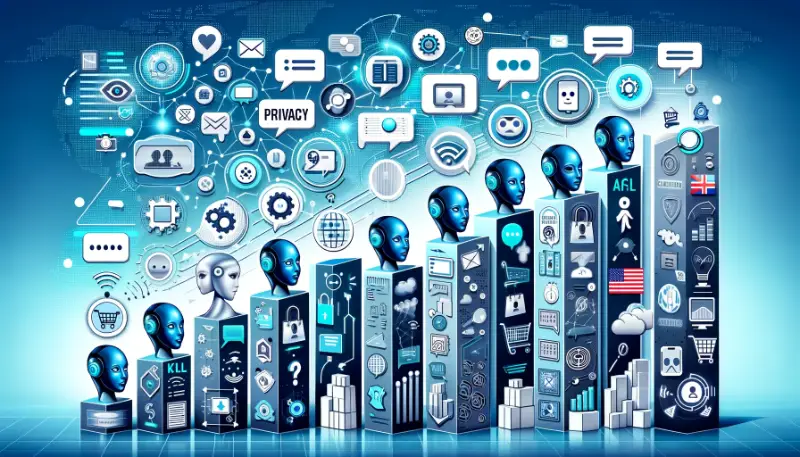
The Evolution and Challenges of AI Chatbots in Retail
The Evolution and Challenges of AI Chatbots in Retail
Trends Shaping the Future of AI Chatbots for Small Businesses
AI chatbots are transcending traditional text-based interfaces. There’s a growing trend towards voice-activated and visually capable chatbots, offering customers new ways to interact with brands using voice or images. Additionally, these chatbots are being integrated with sophisticated analytics tools, providing retailers with deeper insights into consumer behaviors and preferences.
Addressing Challenges in AI Chatbot Implementation
Despite the advantages of AI chatbots, there are challenges, such as data privacy concerns, language barriers, and achieving a natural flow in conversations. Retailers can overcome these hurdles by prioritizing data security, incorporating multilingual capabilities in chatbots, and continuously enhancing their algorithms for a better conversational experience.
Positioning Small Businesses for AI Chatbot Advancements
To fully harness AI chatbots in the future, retail businesses must stay abreast of AI technological advancements and remain in tune with customer expectations. By integrating AI chatbots into their strategic planning, small businesses can stay ahead in the competitive market and provide outstanding customer experiences, adapting to the dynamic retail industry landscape.
Conclusion: The Transformative Role of AI Chatbots for Small Business
AI chatbots have become indispensable tools in the retail sector, enabling small businesses to provide customized, efficient, and continuous customer service. These advanced solutions streamline operations and contribute significantly to sales growth.
For small businesses to excel in the competitive retail market, it’s crucial to select the appropriate AI chatbot, train it effectively, and consistently monitor its performance. Embracing these AI-driven solutions positions retail businesses at the leading edge of the industry, maximizing the advantages of AI technology.
The outlook for AI chatbots in retail is exceptionally bright, and those big or small businesses that adopt this technology stand to flourish in the digital age.
Frequently Asked Questions (FAQ) about AI Chatbots for Small Business
1. What does GPT stand for?
2. How are chatbots used in the retail industry?
3. What is the difference between chatbots and ChatGPT?
Chatbots are computer programs designed to simulate conversation, either through text or voice interactions. They can be rule-based, operating on predefined rules and decision trees, or AI-powered, utilizing artificial intelligence to provide more dynamic responses.
On the other hand, ChatGPT (Generative Pre-trained Transformer) is a specific language model developed by OpenAI, part of the GPT family. It doesn’t rely on predefined responses but uses deep learning techniques to understand and generate human-like text, making it capable of handling a wide range of topics and maintaining coherence in conversations.
4. Can chatbot be customized?
5. What is a common use of AI in the retail industry?
6. What technology goes into creating chatbots for retailers?
7. How to use AI in retail business?
8. How is AI used in Walmart?
Use it for your business in a similar way to improve your local business.
9. What are the 4 types of chatbots?
- Scripted or Rule-Based Chatbots
- Intelligent or AI-Powered Chatbots
- Transactional Chatbots
- Conversational Agents or Virtual Assistants
10. Which industries use chatbots the most?
11. Which Amazon service is used to build chatbot?
12. What are the risks of AI in retail?
13. What is the difference between AI chatbot and ChatGPT?
14. What is better than ChatGPT?
15. How can small businesses benefit from Chatbots?
- 24/7 Availability: Chatbots provide round-the-clock support, enabling customers to get assistance outside regular business hours. This continuous availability is particularly beneficial for international clients in different time zones.
- Improved Customer Satisfaction: By offering immediate responses and engaging with customers proactively, chatbots can enhance the overall customer experience. They can send greetings, welcome messages, and even proactive messages to check on the customer’s experience.
- Cost Efficiency: Chatbots reduce the need for a large customer support team by automating responses to common queries, thereby saving on labor costs.
- Enhanced Lead Generation and Sales: Chatbots can capture leads, engage with potential customers, and even influence sales decisions by recommending products or services based on user interactions and data.
- Personalization: Chatbots can offer personalized experiences by remembering user preferences and tailoring conversations and recommendations accordingly.
- Data Collection and Analysis: Chatbots gather valuable insights about customer behavior and preferences, which can be used to tailor marketing strategies and product development.
- Reduced Human Error: With consistent performance and attention to detail, chatbots minimize the errors that might occur with human agents, especially during peak periods.
- Scalability: As businesses grow, chatbots can handle an increasing volume of queries without additional costs.
- Streamlined Operations: Chatbots can streamline various business operations, such as appointment scheduling and feedback collection, making these processes more efficient.
- Omnichannel Support: Chatbots can integrate with various communication platforms, providing a seamless customer experience across different channels.
- Boost in Customer Engagement: Chatbots can engage customers with interactive content, tips, and product recommendations, enhancing their overall engagement with the brand.
- Reduction in Shopping Cart Abandonment: By assisting customers during their shopping journey, chatbots can help reduce cart abandonment rates by addressing queries and offering incentives at critical decision points.
For small businesses, implementing chatbots is not just a trend but a strategic move to improve customer service, increase sales, and optimize operations while keeping costs low. Building a chatbot for a small business has become more accessible, with intuitive chatbot builders available that require no coding skills
16. Can chatbot be customized?
A custom chatbot can be designed to handle automated conversations on a large scale, significantly enhancing customer engagement. For example, customization options can include personalized onboarding experiences, where businesses are guided through the process of understanding and integrating chatbot technology into their systems.
Moreover, custom chatbots come with implementation assistance, providing end-to-end services from identifying business requirements to deploying and testing the chatbot. This can include determining whether an AI or rule-based solution is needed, deciding on the language capabilities of the bot, and choosing between omnichannel or single-channel solutions.
Custom chatbots also allow for prioritized support and custom integrations, ensuring that the chatbot solution seamlessly integrates with other business systems like CRM, accounting, and marketing analytics tools. Additionally, they offer white-label or custom branding options, enabling businesses to present the chatbot under their own brand name, enhancing brand credibility and trust.
With platforms like Zapier, creating a custom AI chatbot is accessible even without coding skills. Zapier allows businesses to build custom AI chatbots with ease, providing ready-to-use templates, options to connect with business-specific data sources, and the ability to match the chatbot’s appearance to the brand’s style. This process includes setting custom greetings, roles, and response rules, as well as secure sharing options for the chatbot.
In summary, custom chatbots offer a wide range of benefits, including personalized customer experiences, seamless integration with business systems, brand alignment, and competitive advantage through tailored conversational marketing and streamlined internal workflows. These features make custom chatbots a valuable tool for businesses looking to enhance their customer engagement, operational efficiency, and overall brand presence.
Sources:

Start a Blog: Your Essential Guide to Blogging Success
Learn how to start a blog with this comprehensive guide. Discover the best platforms, hosting options, and strategies to build a successful blog today.

Fatty15 Review: Boost Your Cellular Health with C15:0
Discover how Fatty15, a C15:0 supplement, supports cellular health, boosts energy, and promotes longevity. Perfect for busy professionals seeking wellness.

Remote Work vs Office Work: Finding the Best Balance
Explore pros and cons of remote work vs office work, including hybrid models, to find the best fit for productivity, collaboration, and employee satisfaction.

180 Challenges & Solutions:AI Transforming Medical Practices
Discover how AI in healthcare is transforming small medical businesses by streamlining operations, improving patient care, and reducing costs. Learn more!

Discover the Amazing Fruit Juice Benefits for Immunity
Discover the amazing fruit juice benefits for boosting your immune system with essential vitamins, antioxidants, and practical tips for a healthier lifestyle.

Wearable Breast Pumps: A Game Changer for Modern Moms
Find out how wearable breast pumps revolutionize breastfeeding with hands-free convenience, portability, and discretion. Solution for multitasking modern moms.

How AI is Revolutionizing Healthcare Access and Equity
Discover how AI in healthcare is transforming patient care, addressing health inequities, and creating a more equitable healthcare system for all.

iPhone 17 Air: The Future of Ultra-Thin Smartphone Design
Discover the iPhone 17 Air, Apple's ultra-thin smartphone redefining design and performance with cutting-edge features and groundbreaking technology.

Apple’s M4 MacBook Air: The Next Big Thing in 2025
Discover the revolutionary M4 MacBook Air, Apple's next big thing in ultraportable laptops, featuring groundbreaking performance, design, and efficiency.

The Rise of Remote Copywriting Jobs: Opportunities Await
Discover the booming world of copywriting jobs remote. Learn how to find opportunities, build skills, and thrive in a flexible, rewarding career.