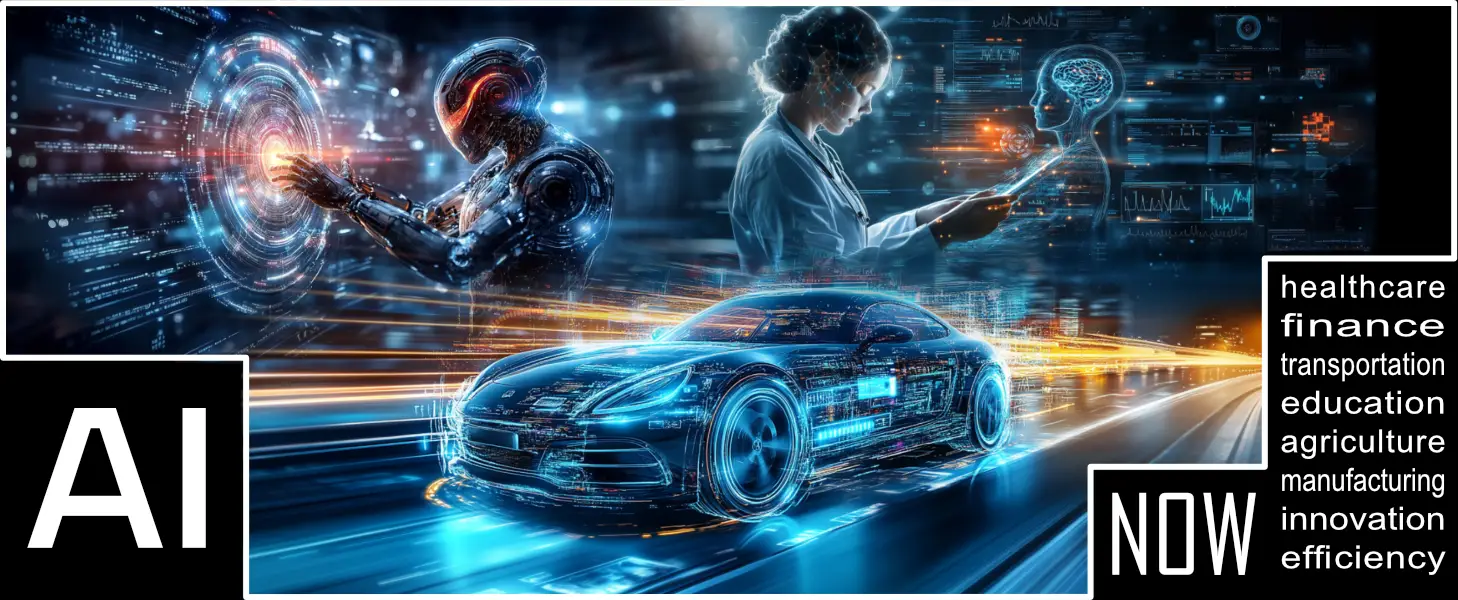
What is this article about?
Explore the transformative power of artificial intelligence, its applications across industries, and how it's reshaping our world with innovation and efficiency
Maximize revenue withAI Agentsand automation
What if the technology of tomorrow could revolutionize the way we work, live, and innovate today? Discover how artificial intelligence is transforming industries and shaping the future.
Key Takeaways
- Artificial intelligence (AI) is a transformative technology reshaping industries and daily life, with the global AI market projected to reach $190.61 billion by 2025.
- AI applications span various sectors, including healthcare, finance, transportation, education, agriculture, and manufacturing, driving innovation and efficiency.
- Key AI technologies include machine learning (supervised, unsupervised, and reinforcement learning), natural language processing (NLP), computer vision, robotics, and expert systems.
- In healthcare, AI improves diagnostics, personalizes treatment plans, and accelerates drug discovery, with AI algorithms detecting diseases like cancer with high accuracy.
- In finance, AI enhances fraud detection, automates trading strategies, and provides personalized financial advice, improving efficiency and customer experience.
- AI-powered tools like chatbots and predictive analytics are transforming customer service, decision-making, and operational efficiency across industries.
- Deep learning, a subset of machine learning, has enabled breakthroughs like AlphaFold, which revolutionized protein structure prediction and drug discovery.
- AI-driven analytics supports predictive analytics, personalization, and operational improvements, helping businesses make data-driven decisions and enhance customer experiences.
- Ethical considerations in AI include data privacy, algorithmic bias, and decision-making dilemmas, requiring transparency, accountability, and responsible practices.
- Challenges in AI adoption include addressing bias, ensuring data privacy, and balancing innovation with ethical considerations.
- AI adoption strategies for businesses include identifying goals, starting with small projects, and leveraging AI consulting services for tailored guidance.
- AI-powered chatbots provide 24/7 support, scalability, and cost savings, transforming customer service in sectors like e-commerce and banking.
- AI benefits include enhanced efficiency, improved decision-making, driving innovation, and enabling personalized customer experiences.
- Learning AI through courses and hands-on tools is essential for individuals and businesses to stay competitive in the evolving digital landscape.
- The future of AI holds immense potential, with applications in autonomous vehicles, personalized medicine, and smart cities, but requires ethical and responsible development to maximize societal benefits.
Table of Contents
Introduction
Artificial intelligence (AI) has emerged as a transformative force in our modern world, reshaping industries and revolutionizing the way we live and work. This cutting-edge technology, which enables machines to mimic human intelligence and perform tasks that typically require human cognition, has become increasingly relevant across various sectors. From healthcare to finance, and from technology to manufacturing, AI is driving innovation and efficiency at an unprecedented pace.
As we delve into the realm of AI insights, it’s crucial to understand the far-reaching impact of this technology. Artificial intelligence is no longer confined to the realm of science fiction; it’s a tangible reality that’s influencing our daily lives in ways both obvious and subtle. The growing importance of AI is evident in its widespread adoption across industries, with global AI market size projected to reach $190.61 billion by 2025.
In healthcare, AI is revolutionizing patient care through improved diagnostics, personalized treatment plans, and drug discovery. For instance, AI algorithms can now detect certain types of cancer with accuracy rivaling that of human experts. In the financial sector, AI-powered tools are enhancing fraud detection, automating trading strategies, and providing personalized financial advice. The technology industry, unsurprisingly, is at the forefront of AI adoption, integrating it into everything from search engines to social media platforms.
The applications of artificial intelligence extend far beyond these sectors. In transportation, we’re witnessing the development of self-driving cars. In education, AI is personalizing learning experiences. In agriculture, it’s optimizing crop yields. The list goes on, showcasing the versatility and potential of this groundbreaking technology.
As we explore AI insights throughout this blog, we’ll delve deeper into various aspects of artificial intelligence. We’ll examine its core technologies, such as machine learning and natural language processing. We’ll investigate its myriad applications across different industries. We’ll also discuss the challenges and ethical considerations that come with the widespread adoption of AI.
Whether you’re a tech enthusiast, a business leader, or simply curious about the future of technology, understanding AI is crucial in today’s rapidly evolving digital landscape. The insights we’ll share will not only broaden your understanding of artificial intelligence but also help you grasp its potential impact on your personal and professional life.
So, fasten your seatbelts as we embark on this exciting journey into the world of artificial intelligence. From unraveling complex algorithms to exploring futuristic applications, we’ll provide you with valuable AI insights that will illuminate the path of this revolutionary technology. Let’s dive in and discover how AI is shaping our present and molding our future.
What is Artificial Intelligence?
Artificial intelligence (AI) is a revolutionary field of computer science that aims to create intelligent machines capable of performing tasks that typically require human intelligence. At its core, AI systems are designed to perceive their environment, learn from experiences, reason through complex problems, and take actions to achieve specific goals.
The concept of artificial intelligence encompasses a wide range of technologies and approaches. One of the fundamental pillars of AI is machine learning, a subset of AI that focuses on developing algorithms and statistical models that enable computer systems to improve their performance on a specific task through experience, without being explicitly programmed.
Machine learning algorithms can be broadly categorized into three types:
- Supervised learning: Where the algorithm learns from labeled data
- Unsupervised learning: Where the algorithm identifies patterns in unlabeled data
- Reinforcement learning: Where the algorithm learns through interaction with its environment
Another crucial component of AI is natural language processing (NLP), which enables machines to understand, interpret, and generate human language. NLP is the technology behind voice assistants, chatbots, and language translation services. It combines linguistics, computer science, and AI to bridge the gap between human communication and computer understanding.
Some key applications of NLP include:
- Text classification
- Sentiment analysis
- Language translation
- Speech recognition
- Text summarization
The field of artificial intelligence is rapidly evolving, with new breakthroughs and applications emerging regularly. From healthcare diagnostics to financial forecasting, AI is transforming industries and reshaping our daily lives.
As we delve deeper into the world of AI, it’s important to understand that it’s not just about creating machines that can think like humans. Instead, AI often excels at tasks that are difficult for humans, such as processing vast amounts of data quickly or identifying subtle patterns that might escape human observation.
The development of AI technologies has led to the creation of various subfields and specialized areas of research. Some of these include:
- Computer vision: Enabling machines to interpret and understand visual information from the world
- Robotics: Combining AI with physical machines to perform tasks in the real world
- Expert systems: AI programs designed to solve complex problems by mimicking the decision-making ability of a human expert
- Fuzzy logic: A method of reasoning based on “degrees of truth” rather than the usual “true or false” (1 or 0) Boolean logic
As artificial intelligence continues to advance, it promises to bring about significant changes in how we work, live, and interact with technology. From self-driving cars to personalized medicine, the potential applications of AI are vast and varied.
However, with great power comes great responsibility. As AI systems become more sophisticated and integrated into our lives, important ethical considerations arise. These include issues of privacy, bias in AI algorithms, job displacement, and the long-term implications of creating machines that may one day surpass human intelligence.
Understanding artificial intelligence is crucial in today’s rapidly evolving technological landscape. Whether you’re a student, professional, or simply curious about the future of technology, grasping the fundamentals of AI can provide valuable insights into the forces shaping our world and the opportunities that lie ahead.
Key Insights on AI
Artificial intelligence (AI) has been making waves across various industries, revolutionizing the way we work, live, and interact with technology. In this section, we’ll explore some of the most significant advancements in AI technology and their impact on modern businesses.
Recent Advancements in AI Technology
The field of AI has seen remarkable progress in recent years, with breakthroughs in several key areas:
- Machine Learning Algorithms
Machine learning, a subset of AI, has been at the forefront of technological innovation. These algorithms allow computers to learn from data and improve their performance without being explicitly programmed. Recent studies have shown that machine learning algorithms can now outperform humans in various tasks, from image recognition to complex decision-making processes.
- Deep Learning
Deep learning, a more specialized branch of machine learning, has made significant strides. This technology mimics the human brain’s neural networks, allowing for more sophisticated pattern recognition and data processing. DeepMind’s AlphaFold, for instance, has revolutionized protein structure prediction, a breakthrough that could accelerate drug discovery and our understanding of diseases.
The Rise of AI-Powered Tools
As AI technology advances, we’re seeing a proliferation of AI-powered tools across various sectors:
- Healthcare: AI-powered diagnostic tools are helping doctors identify diseases earlier and more accurately. For example, AI algorithms can now detect certain types of cancer with a higher degree of accuracy than human radiologists.
- Finance: AI-driven risk assessment tools are revolutionizing the banking and insurance industries, providing more accurate predictions and personalized services.
- Customer Service: AI-powered chatbots are becoming increasingly sophisticated, handling complex customer queries and providing 24/7 support.
The Impact of AI-Driven Analytics
AI-driven analytics is transforming how businesses make decisions and operate:
- Predictive Analytics: AI can analyze vast amounts of data to predict future trends, helping businesses make informed decisions about inventory, pricing, and marketing strategies.
- Personalization: AI-driven analytics enable businesses to offer highly personalized experiences to their customers. Netflix’s recommendation system, for instance, uses AI to suggest content based on viewing history and preferences.
- Operational Efficiency: AI can identify inefficiencies in business processes and suggest improvements, leading to significant cost savings and productivity gains.
The Importance of AI in Modern Businesses
The integration of AI-powered tools and AI-driven analytics is no longer a luxury but a necessity for businesses looking to stay competitive:
- Improved Decision Making: AI can process and analyze data at a scale and speed impossible for humans, leading to more informed and timely business decisions.
- Enhanced Customer Experience: AI-powered tools can provide personalized, round-the-clock customer service, improving satisfaction and loyalty.
- Increased Productivity: By automating routine tasks, AI frees up human workers to focus on more complex, creative, and strategic work.
- Innovation: AI is driving innovation across industries, from autonomous vehicles to smart homes, opening up new markets and opportunities for businesses.
As we continue to unlock the potential of artificial intelligence, it’s clear that AI-powered tools and AI-driven analytics will play an increasingly crucial role in shaping the future of business and technology. Companies that embrace these advancements and effectively integrate AI into their operations will be well-positioned to thrive in the rapidly evolving digital landscape.
While the possibilities are exciting, it’s important to approach AI adoption thoughtfully, considering ethical implications and ensuring that these powerful tools are used responsibly and for the benefit of society as a whole.
Applications of AI
Artificial intelligence has revolutionized numerous industries, transforming the way we work, live, and interact with technology. Let’s explore some of the most impactful AI applications across various sectors.
AI in Healthcare
The healthcare industry has witnessed a significant transformation thanks to AI. AI-powered diagnostic tools have become increasingly prevalent, enhancing the accuracy and speed of disease detection. For instance:
- Medical imaging analysis: AI algorithms can analyze X-rays, MRIs, and CT scans to detect abnormalities with remarkable precision.
- Personalized treatment plans: Machine learning models can analyze patient data to recommend tailored treatment strategies.
- Drug discovery: AI accelerates the process of identifying potential new medications by analyzing vast amounts of chemical and biological data.
These advancements not only improve patient outcomes but also reduce the workload on healthcare professionals, allowing them to focus on more complex cases.
AI in Finance
The financial sector has embraced AI to enhance security, efficiency, and decision-making processes. Some key applications include:
- Fraud detection: AI algorithms can analyze transaction patterns in real-time to identify and prevent fraudulent activities.
- Financial forecasting: Machine learning models can predict market trends and stock performance with increasing accuracy.
- Algorithmic trading: AI-powered systems can execute trades at optimal times based on complex market analysis.
- Customer service: AI chatbots provide 24/7 support for basic financial queries and transactions.
These AI applications have not only improved the efficiency of financial institutions but also enhanced the overall customer experience in banking and investment services.
Broader AI Applications
Beyond healthcare and finance, AI has found its way into numerous other sectors, revolutionizing processes and creating new possibilities:
- Retail:
-
- Personalized recommendations: AI analyzes customer behavior to suggest products tailored to individual preferences.
- Inventory management: Machine learning optimizes stock levels and supply chain efficiency.
- Virtual try-ons: AI-powered augmented reality allows customers to visualize products before purchase.
- Manufacturing:
-
- Predictive maintenance: AI systems can predict equipment failures before they occur, reducing downtime.
- Quality control: Computer vision and machine learning ensure product quality at scale.
- Supply chain optimization: AI algorithms manage complex supply networks more efficiently.
- Transportation:
-
- Autonomous vehicles: Self-driving cars and trucks use AI for navigation and decision-making.
- Traffic management: AI systems optimize traffic flow in smart cities.
- Logistics planning: AI improves route planning and delivery efficiency.
- Education:
-
- Personalized learning: AI adapts educational content to individual student needs and learning styles.
- Automated grading: Natural language processing assists in grading essays and open-ended questions.
- Virtual tutors: AI-powered chatbots provide 24/7 support for students.
- Agriculture:
-
- Crop monitoring: AI analyzes satellite imagery and sensor data to optimize crop health and yield.
- Precision farming: Machine learning guides targeted application of water, fertilizers, and pesticides.
- Livestock management: AI systems monitor animal health and behavior to improve welfare and productivity.
These diverse AI applications demonstrate the technology’s versatility and its potential to drive innovation across industries. As AI continues to evolve, we can expect even more groundbreaking applications that will further transform our world.
The rapid advancement of AI applications has led to increased demand for AI expertise. AI consulting services have emerged to help businesses identify and implement AI solutions tailored to their specific needs. Additionally, the growing interest in AI has sparked a surge in educational offerings, with many institutions now providing comprehensive artificial intelligence courses to prepare the workforce for this technological revolution.
As we continue to explore and develop AI applications, it’s crucial to consider the ethical implications and ensure that these powerful tools are used responsibly. The future of AI holds immense potential, and its applications will undoubtedly continue to shape and improve our world in ways we have yet to imagine.
Benefits of AI
Artificial intelligence (AI) has revolutionized various industries, offering numerous advantages that enhance efficiency, decision-making, and innovation. Let’s explore some of the key benefits that AI brings to businesses and individuals alike.
Enhanced Efficiency

🔎 Want to browse the web privately? 🌎 Or appear as if you're in another country?
Get for FREE PureVPN with this special ICZ offer.

One of the primary benefits of AI is its ability to significantly boost efficiency across various processes. AI-powered systems can perform tasks at speeds far beyond human capabilities, processing vast amounts of data in seconds. This rapid processing allows businesses to streamline operations, reduce manual labor, and allocate human resources to more complex, creative tasks.
For instance, in manufacturing, AI-driven robots can work around the clock without fatigue, dramatically increasing production rates. Similarly, in data analysis, AI algorithms can quickly sift through enormous datasets, identifying patterns and insights that would take humans considerably longer to discover.
Improved Decision-Making
AI’s capacity to analyze large volumes of data and identify patterns makes it an invaluable tool for decision-making. By leveraging machine learning algorithms, AI systems can provide data-driven insights that help businesses make more informed choices.
In the financial sector, for example, AI-powered tools can analyze market trends, assess risk factors, and make investment recommendations with a level of precision that surpasses human analysts. This capability not only improves the quality of decisions but also reduces the potential for human error and bias.
Driving Innovation
AI is a catalyst for innovation across various industries. By automating routine tasks and providing advanced analytical capabilities, AI frees up human resources to focus on creative problem-solving and developing new ideas.
In the field of scientific research, AI algorithms can process and analyze complex data sets, leading to breakthroughs in areas such as drug discovery and climate modeling. This accelerates the pace of scientific progress and opens up new avenues for innovation.
Practical Applications: AI-Powered Chatbots
One of the most visible and practical benefits of AI can be seen in the form of AI-powered chatbots. These intelligent virtual assistants have transformed customer service and support across various industries.
AI-powered chatbots offer several advantages:
- 24/7 Availability: Unlike human agents, chatbots can provide round-the-clock support, ensuring customers receive assistance at any time.
- Instant Responses: Chatbots can instantly access vast knowledge bases to provide quick and accurate answers to customer queries.
- Scalability: A single chatbot can handle multiple conversations simultaneously, effectively managing high volumes of customer interactions.
- Consistency: AI-powered chatbots deliver consistent responses, eliminating the variability that can occur with human agents.
- Cost-Effective: By automating routine inquiries, chatbots reduce the need for large customer service teams, resulting in significant cost savings for businesses.
For example, in the e-commerce sector, AI-powered chatbots can guide customers through product selections, answer frequently asked questions, and even process orders, greatly enhancing the shopping experience while reducing the workload on human staff.
Improved Productivity and Customer Experience
AI-driven solutions have a profound impact on both productivity and customer experience across various sectors:
- Personalization: AI algorithms can analyze customer data to provide personalized recommendations and experiences. In the retail industry, this translates to tailored product suggestions, enhancing customer satisfaction and increasing sales.
- Predictive Maintenance: In manufacturing and infrastructure, AI can predict when equipment is likely to fail, allowing for proactive maintenance. This reduces downtime, increases productivity, and extends the lifespan of valuable assets.
- Process Automation: AI can automate complex, multi-step processes in industries like insurance and banking. For instance, AI systems can process claims or loan applications much faster than traditional methods, improving both productivity and customer satisfaction.
- Enhanced Customer Insights: AI-driven analytics tools can process customer feedback, social media data, and other sources to provide deep insights into customer preferences and behavior. This enables businesses to tailor their products and services more effectively.
- Improved Healthcare Outcomes: In the medical field, AI-powered diagnostic tools can analyze medical images and patient data to assist doctors in making more accurate diagnoses, potentially saving lives and improving patient outcomes.
In conclusion, the benefits of AI are far-reaching and transformative. From enhancing efficiency and decision-making to driving innovation and improving customer experiences, AI is reshaping how businesses operate and how we interact with technology. As AI continues to evolve, we can expect even more profound impacts across various aspects of our personal and professional lives.
Challenges and Ethical Considerations in Artificial Intelligence
As artificial intelligence continues to advance, it brings with it a host of challenges and ethical considerations that must be addressed. These issues are crucial to ensure the responsible development and deployment of AI technologies across various sectors.
Data Privacy Concerns
One of the primary challenges in AI development is the protection of data privacy. AI systems often require vast amounts of data to function effectively, raising concerns about:
- Collection and storage of personal information
- Potential misuse of sensitive data
- Compliance with data protection regulations like GDPR
Organizations must implement robust data governance frameworks to safeguard individual privacy while harnessing the power of AI. This includes implementing encryption techniques, anonymization processes, and strict access controls.
Bias in AI Algorithms
Another significant challenge is the presence of bias in AI algorithms. This can lead to unfair or discriminatory outcomes, particularly in areas such as:
- Hiring processes
- Loan approvals
- Criminal justice systems
Bias can stem from various sources, including:
- Biased training data
- Flawed algorithm design
- Lack of diversity in AI development teams
To combat this, developers must actively work to identify and mitigate bias in their AI systems. This involves diverse data collection, regular audits, and inclusive development practices.
Ethical Dilemmas in Decision-Making
As AI systems become more autonomous, they increasingly face complex ethical dilemmas. These situations often involve:
- Balancing conflicting interests
- Making life-or-death decisions (e.g., in self-driving cars)
- Determining resource allocation in healthcare
Addressing these ethical challenges requires a multidisciplinary approach, involving ethicists, policymakers, and technologists. It’s crucial to develop AI systems that align with human values and ethical principles.
The Importance of Responsible AI Practices
Given these challenges, the importance of responsible AI practices cannot be overstated. This involves:
- Transparency in AI decision-making processes
- Accountability for AI-driven outcomes
- Regular ethical audits of AI systems
- Ongoing education and training for AI developers and users
Responsible AI practices help build trust in AI technologies and ensure their long-term sustainability. Organizations should adopt ethical guidelines and frameworks to guide their AI development and deployment.
Balancing Innovation and Ethics
While addressing these challenges, it’s crucial to maintain a balance between innovation and ethical considerations. This balance can be achieved by:
- Encouraging collaboration between tech companies, academia, and policymakers
- Investing in AI ethics research
- Developing adaptive regulatory frameworks that evolve with AI technology
By proactively addressing these challenges and ethical considerations, we can harness the full potential of artificial intelligence while minimizing its risks. This approach will help create AI systems that are not only powerful and innovative but also trustworthy and beneficial to society as a whole.
As we continue to explore the vast possibilities of AI, it’s essential to keep these ethical considerations at the forefront of development. By doing so, we can ensure that artificial intelligence serves as a tool for progress and positive change, rather than a source of concern or harm.
Learning and Adopting AI
As artificial intelligence continues to reshape industries, many individuals and businesses are eager to harness its potential. This section explores the various avenues for learning about AI and adopting it in your organization.
Artificial Intelligence Courses: Building a Strong Foundation
One of the most effective ways to gain a solid understanding of AI is through an artificial intelligence course. These courses offer structured learning experiences that cover fundamental concepts, algorithms, and applications of AI. Whether you’re a beginner or looking to expand your existing knowledge, there’s likely a course tailored to your needs.
Artificial intelligence courses typically cover:
- Basic principles of AI and machine learning
- Programming languages commonly used in AI (e.g., Python, R)
- Popular AI frameworks and libraries
- Real-world AI applications and case studies
Many reputable universities and online learning platforms offer artificial intelligence courses. For instance, Coursera’s AI for Everyone provides a non-technical introduction to AI, while more advanced options like Stanford’s Machine Learning course delve into the technical aspects.
AI Consulting Services: Tailored Guidance for Businesses
For businesses looking to adopt AI solutions, AI consulting services can be invaluable. These services bridge the gap between theoretical knowledge and practical implementation, helping organizations navigate the complex landscape of AI technologies.
AI consulting services typically offer:
- AI Readiness Assessment: Evaluating your organization’s current capabilities and identifying areas where AI can add value.
- Strategy Development: Creating a roadmap for AI adoption that aligns with your business goals.
- Solution Design and Implementation: Developing and deploying AI solutions tailored to your specific needs.
- Training and Support: Ensuring your team has the skills and knowledge to maintain and leverage AI systems effectively.
Leading technology companies like IBM and Accenture offer comprehensive AI consulting services. These services can be particularly beneficial for businesses that lack in-house AI expertise or need guidance on complex AI projects.
Practical Steps for AI Adoption
Whether you’re an individual looking to upskill or a business aiming to integrate AI, here are some practical steps to get started:
- Identify Your Goals: Determine what you want to achieve with AI. This could range from automating routine tasks to developing innovative products.
- Assess Your Current Knowledge and Resources: Evaluate your existing skills and the resources available to you or your organization.
- Choose a Learning Path: Based on your goals and current level, select appropriate learning resources. This could be an artificial intelligence course, workshops, or self-study materials.
- Start Small: Begin with manageable AI projects that can demonstrate value quickly. This approach allows for learning and adjustment with minimal risk.
- Seek Expert Guidance: Consider engaging AI consulting services to help navigate complex challenges and ensure successful implementation.
- Stay Updated: AI is a rapidly evolving field. Commit to continuous learning to stay abreast of new developments and opportunities.
By combining structured learning through artificial intelligence courses with the practical insights offered by AI consulting services, individuals and businesses can effectively navigate the exciting world of AI. Remember, the journey of AI adoption is ongoing, and staying curious and adaptable is key to long-term success in this transformative field.
Conclusion: The Transformative Potential of Artificial Intelligence
As we’ve explored throughout this blog post, artificial intelligence is revolutionizing industries and reshaping our world in profound ways. From healthcare to finance, AI applications are driving innovation and efficiency across sectors. The power of machine learning algorithms and deep learning techniques continues to push the boundaries of what’s possible in technology.
Let’s recap some of the key insights we’ve discussed:
- AI is not a single technology, but a broad field encompassing various subfields like machine learning and natural language processing.
- The applications of AI are vast and diverse, ranging from AI-powered chatbots to AI-driven analytics.
- Industries such as healthcare and finance are experiencing significant transformations due to AI integration.
- AI technology is constantly evolving, with new breakthroughs happening regularly.
The potential of artificial intelligence to solve complex problems and enhance human capabilities is truly remarkable. As AI continues to advance, we can expect to see even more innovative solutions and groundbreaking discoveries.
However, the journey into AI is ongoing, and there’s always more to learn and explore. Whether you’re a business leader, a tech enthusiast, or simply curious about the future of technology, now is the time to deepen your understanding of AI.
Here are some ways you can further engage with the world of AI:
- Expand Your Knowledge: Consider taking an artificial intelligence course to gain a more comprehensive understanding of AI concepts and applications. Many online platforms offer courses ranging from beginner to advanced levels.
- Explore AI Tools: Experiment with AI-powered tools in your personal or professional life. This hands-on experience can provide valuable insights into AI’s practical applications.
- Stay Informed: Follow AI news and developments to keep up with the latest trends and breakthroughs in the field.
- Consider AI Implementation: If you’re a business owner or decision-maker, explore how AI could benefit your organization. AI consulting services can provide tailored advice on implementing AI solutions in your specific context.
- Engage in Discussions: Join AI forums or attend AI-focused events to connect with others interested in this field and share ideas.
Remember, the world of artificial intelligence is vast and constantly evolving. By staying curious and engaged, you can be part of this exciting technological revolution. Whether you’re looking to implement AI in your business, advance your career in tech, or simply understand the technology shaping our future, the journey into AI is both fascinating and rewarding.
Artificial intelligence is not just a trend—it’s a fundamental shift in how we approach problems, create solutions, and interact with technology. As we stand on the brink of new AI breakthroughs, the question isn’t whether AI will impact our lives, but how we will harness its potential to create a better future.
So, take the next step in your AI journey today. Explore, learn, and imagine the possibilities. The future of AI is not just something to observe—it’s something you can actively shape and be part of. Embrace the AI revolution and see where it can take you!


Beginner’s Guide to Affiliate Marketing for Online Success
Learn how to start affiliate marketing, a low-cost way to earn online income. Discover strategies, tools, and tips to succeed in this growing industry.

Effective Blog Design That Attracts Readers for Success
Learn how to create a blog design that attracts readers with effective layouts, engaging content, and strategies to boost retention and SEO.

Start a Blog: Your Essential Guide to Blogging Success
Learn how to start a blog with this comprehensive guide. Discover the best platforms, hosting options, and strategies to build a successful blog today.

Fast Google Indexing: Get Found Quickly and Boost Traffic
Learn how to get found on Google quickly with proven strategies for fast indexing, SEO optimization, and boosting your website's visibility effectively.

Howard Lutnick and Trump’s Tariffs: A New Trade Era Ahead
Explore Howard Lutnick's role in shaping Trump's tariff strategy, its economic impacts, and controversies, including potential conflicts of interest.

Free Internal and External Linking Strategies for SEO
Master internal and external linking strategies to boost SEO, enhance user experience, and drive organic traffic with actionable tips and best practices.

Mastering SEO Article Structure for Better Readability and Rankings
Learn how a well-crafted SEO article structure boosts readability and rankings. Discover techniques to engage readers and optimize for search engines.

How To Craft High-Ranking Titles and Meta Descriptions
Learn how to optimize meta titles and meta descriptions to boost your website's visibility, improve click-through rates, and dominate search results.

How AI Agents Revolutionize Keyword Research for SEO Success
Discover how AI keyword research revolutionizes SEO by saving time, improving accuracy, and uncovering hidden opportunities. Learn to stay ahead in SEO.

How To AI SEO: Strategies for the Future of Search
Discover the evolving landscape of AI SEO and learn how to optimize content for AI-driven search engines. Master strategies to stay ahead in digital marketing.