What is this article about?
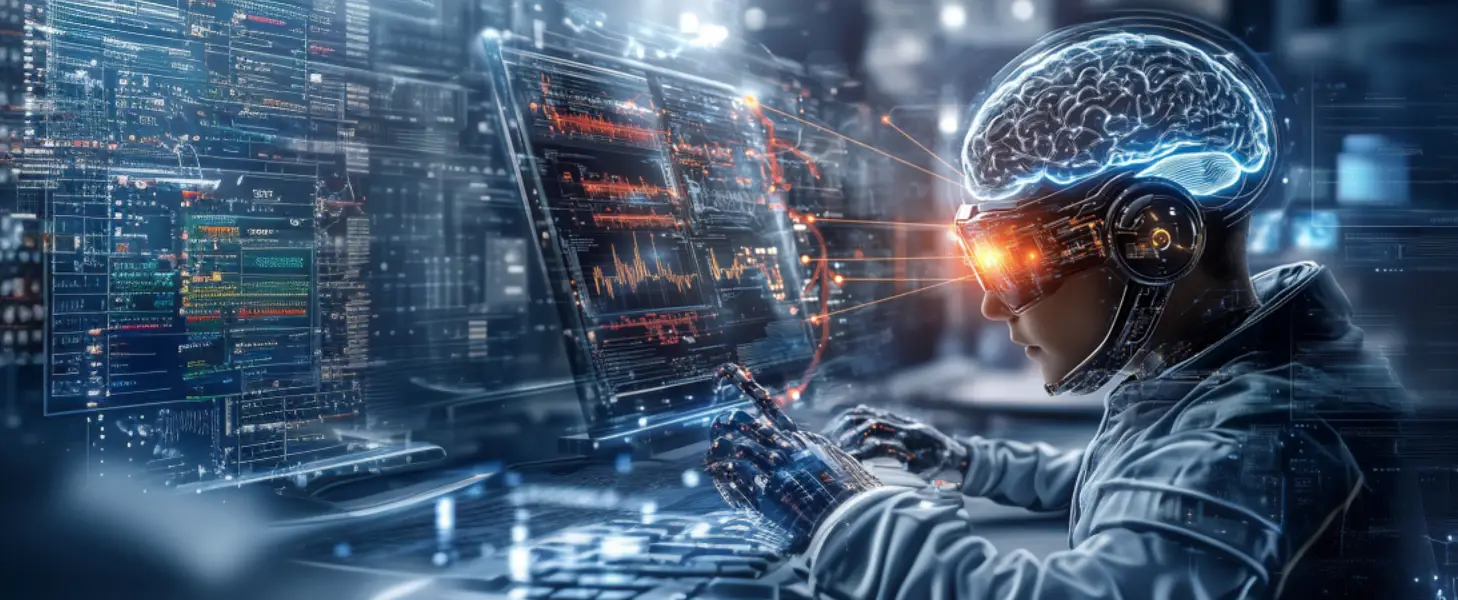
Discover how brain-computer interfaces are revolutionizing assistive technology, enabling thought-controlled devices and offering new hope for individuals with disabilities.
Maximize revenue withAI Agentsand automation
What if you could control a device with just your thoughts? Brain-computer interfaces are turning this futuristic idea into a life-changing reality.
Key Takeaways
- Brain-Computer Interfaces (BCIs) establish a direct communication pathway between the human brain and external devices, enabling control through thought alone.
- BCIs are transformative for individuals with disabilities, offering solutions for mobility assistance, communication aids, environmental control, and rehabilitation.
- BCIs are categorized into invasive (surgically implanted electrodes) and non-invasive (external sensors like EEG caps) systems, each with its own advantages and limitations.
- The basic functionality of BCIs involves signal acquisition, processing, feature translation, and device output to enable interaction with external systems.
- Intracortical BCIs have shown significant advancements in decoding neural signals for precise finger movement control, improving prosthetic device functionality and motor rehabilitation.
- AI-driven neural signal decoding, such as the DFINE deep learning method, enhances the accuracy, efficiency, and adaptability of BCIs, enabling real-time processing and personalized user experiences.
- BCIs are being applied in virtual environments, such as controlling virtual drones and interacting with VR spaces, offering new possibilities for accessibility and immersive experiences.
- AI-integrated prosthetic limbs controlled by BCIs provide advanced mobility solutions, including sensory feedback and adaptive learning for more natural and intuitive use.
- Future advancements in BCIs include miniaturization, wireless systems, enhanced signal interpretation, and integration with other technologies like robotics and smart environments.
- Ethical considerations, such as privacy, equitable access, and long-term effects of brain implants, are critical as BCIs become more advanced and widespread.
- BCIs hold potential beyond assistive technology, including cognitive enhancement, mental health treatment, and direct brain-to-brain communication.
- The development of brain pacemakers and other therapeutic BCIs could revolutionize treatment for neurological disorders and motor impairments.
- BCIs are reshaping human-machine interaction, offering independence and empowerment for individuals with disabilities while pushing the boundaries of technological innovation.
Introduction to Brain-Computer Interfaces
Assistive technology, as a groundbreaking innovation, is revolutionizing how we interact with computers and the world around us. Enter the brain-computer interface (BCI), a cutting-edge system that establishes a direct communication pathway between the human brain and external devices. This remarkable technology is opening up new possibilities for individuals with disabilities, offering hope and independence like never before.
Brain-computer interfaces represent a significant leap forward in our ability to bridge the gap between human thought and technological action. By harnessing the power of neural signals, BCIs allow users to control computers, prosthetic limbs, and other devices using nothing but their thoughts. This direct brain-to-machine communication holds immense potential for improving the quality of life for those with limited mobility or communication abilities.
The concept of BCIs has captured the imagination of scientists, engineers, and healthcare professionals worldwide. As research in this field continues to advance, we’re witnessing a growing interest in the applications of brain-computer interfaces across various domains. From helping paralyzed individuals regain motor function to enabling non-verbal communication for those with speech impairments, the possibilities seem endless.
Key areas where BCIs are making a significant impact include:
- Mobility assistance: Enabling individuals with paralysis to control wheelchairs or prosthetic limbs.
- Communication aids: Providing a means of expression for those unable to speak or type.
- Environmental control: Allowing users to interact with their surroundings, such as controlling lights or appliances.
- Rehabilitation: Assisting in the recovery of motor functions after stroke or injury.
As we delve deeper into the world of brain-computer interfaces, we’ll explore the underlying technology, its current applications, and the promising future that lies ahead. This fascinating field represents a convergence of neuroscience, computer science, and biomedical engineering, pushing the boundaries of what’s possible in human-machine interaction.
The journey of BCIs from science fiction to reality has been nothing short of remarkable. Today, we stand on the cusp of a new era in assistive technology, where the power of thought can overcome physical limitations. Join us as we unravel the intricacies of brain-computer interfaces and discover how they’re transforming lives, one neural signal at a time.
What is a Brain-Computer Interface?
In our increasingly digital world, the fusion of human cognition and computer technology has given rise to a groundbreaking innovation: the brain-computer interface (BCI). But what exactly is a brain-computer interface, and how does it work?
A brain-computer interface, often abbreviated as BCI, is a direct communication pathway between the human brain and an external device, typically a computer or other electronic system. This revolutionary technology allows for the translation of brain signals into commands that can control external devices or applications, effectively bypassing the traditional neuromuscular pathways.
At its core, a BCI functions by interpreting the electrical activity produced by the brain. This activity is then processed and translated into actionable commands that can be understood and executed by a computer or other connected devices. The primary goal of a BCI is to provide a means of interaction and communication for individuals who may have limited or no ability to use conventional interfaces due to physical disabilities or neurological conditions.
BCIs can be categorized into two main types:
- Invasive BCIs: These involve surgically implanting electrodes directly into the brain tissue. While they offer high-resolution signals, they come with the risks associated with brain surgery.
- Non-invasive BCIs: These use external sensors to detect brain activity, such as electroencephalography (EEG) caps worn on the scalp. They are safer and more accessible but may provide less precise signals.
The basic functionality of a brain-computer interface typically involves several key steps:
- Signal Acquisition: The BCI system captures brain signals using various neuroimaging techniques, such as EEG, fMRI, or implanted electrodes.
- Signal Processing: The raw brain signals are processed to remove noise and extract relevant features.
- Feature Translation: The processed signals are translated into commands that the computer can understand and execute.
- Device Output: The translated commands are used to control an external device or application, such as a computer cursor, a prosthetic limb, or a communication device.
Brain-computer interfaces have a wide range of potential applications, including:
- Assisting individuals with severe motor disabilities to communicate and control their environment
- Rehabilitating patients recovering from stroke or other neurological conditions
- Enhancing cognitive abilities or memory in healthy individuals
- Developing advanced human-computer interaction methods for virtual and augmented reality
As research in this field continues to advance, the possibilities for brain-computer interfaces are expanding rapidly. From helping paralyzed individuals regain independence to potentially augmenting human cognitive capabilities, BCIs represent a frontier where neuroscience meets computer science, promising to revolutionize how we interact with technology and the world around us.
While brain-computer interfaces hold immense potential, it’s important to note that the technology is still in its early stages. Researchers and engineers are continuously working to improve the accuracy, reliability, and usability of BCIs. As these advancements continue, we may see BCIs become more commonplace in various aspects of our lives, from healthcare to entertainment and beyond.
In conclusion, a brain-computer interface is a remarkable technology that creates a direct link between the human brain and external devices. By translating brain signals into computer commands, BCIs open up new possibilities for communication, control, and human-computer interaction. As this field evolves, it promises to bring about significant changes in how we interact with technology and potentially enhance human capabilities in ways we’ve only begun to imagine.
Intracortical BCI for Finger Movements
The field of brain-computer interfaces (BCIs) has seen remarkable progress in recent years, particularly in the realm of intracortical BCIs for finger movement control. These advancements are revolutionizing the way we approach assistive technology and motor control rehabilitation.
Breakthrough in High-Performance BCIs
A groundbreaking study published in PubMed has shed light on the potential of high-performance BCIs. This research marks a significant step forward in our understanding of how intracortical BCIs can be used to restore fine motor control.
The study focused on:
- Decoding neural signals related to individual finger movements
- Translating these signals into precise digital commands
- Improving the accuracy and speed of finger movement predictions
Enhancing Precision in Motor Control
Intracortical BCIs work by directly interfacing with the motor cortex, the area of the brain responsible for planning and executing movements. This direct connection allows for:
- More nuanced control over prosthetic devices
- Faster response times between thought and action
- Increased accuracy in interpreting user intent
By harnessing the power of intracortical BCIs, researchers are now able to capture and interpret the subtle neural patterns associated with individual finger movements. This level of detail was previously unattainable with non-invasive BCI methods.
Implications for Assistive Technology
The advancements in intracortical BCI technology are paving the way for more sophisticated assistive devices. People with paralysis or limb loss may soon benefit from:
- Prosthetic hands with individual finger control
- Improved typing interfaces for communication devices
- More natural and intuitive control of robotic assistants
These developments are not just incremental improvements.
they represent a quantum leap in our ability to restore function and independence to those with motor impairments.
Challenges and Future Directions
While the progress in intracortical BCI technology is promising, several challenges remain:
- Longevity of implanted devices
- Minimizing tissue damage and inflammatory responses
- Improving signal stability over time
- Developing more robust decoding algorithms
Researchers are actively working on these issues, exploring new materials and techniques to enhance the durability and effectiveness of intracortical BCIs.
From Lab to Real-World Applications
The transition from laboratory experiments to practical, everyday use of intracortical BCIs for finger movements is an exciting frontier. Current efforts are focused on:
- Miniaturizing the technology for more discreet use
- Developing wireless systems to eliminate the need for external wires
- Creating user-friendly interfaces for calibration and daily use
As these technologies mature, we can expect to see more clinical trials and, eventually, widespread adoption of intracortical BCIs in medical and assistive settings.
Ethical Considerations
With great power comes great responsibility. The development of intracortical BCIs raises important ethical questions:
- Privacy and security of neural data
- Equitable access to this potentially life-changing technology
- Long-term effects of brain implants on cognitive function and personality
Addressing these concerns will be crucial as intracortical BCIs become more prevalent in society.
In conclusion, the advancements in intracortical BCIs for finger movements represent a significant leap forward in neurotechnology. As research continues to progress, we stand on the brink of a new era in assistive technology, one where the power of thought can be harnessed to restore function and improve quality of life for millions of people worldwide.
AI-Driven Neural Signal Decoding
Artificial Intelligence (AI) is revolutionizing the field of neural signal decoding, paving the way for more advanced and efficient Brain-Computer Interfaces (BCIs). This cutting-edge technology is enhancing our ability to interpret and translate brain signals into meaningful actions, opening up new possibilities for individuals with neurological disorders and beyond.
One of the most exciting developments in AI neural signal decoding is the DFINE deep learning method. This innovative approach is pushing the boundaries of what’s possible in neural signal interpretation. Let’s delve into how AI is transforming this field and the impact it’s having on BCI technology.
The DFINE Deep Learning Method
The DFINE (Deep Feature Interaction Network) method represents a significant leap forward in neural signal decoding advancements. This sophisticated AI algorithm is designed to extract and interpret complex patterns from neural signals with unprecedented accuracy. Here’s how it works:
- Feature Extraction: DFINE uses advanced neural networks to identify and extract relevant features from raw neural data.
- Interaction Modeling: The algorithm then models the interactions between these features, capturing subtle relationships that traditional methods might miss.
- Adaptive Learning: DFINE continuously adapts and refines its understanding of neural signals, improving its performance over time.
Researchers from the University of California, San Francisco have demonstrated the potential of DFINE in a recent study published on BioRxiv. Their findings show that DFINE outperforms conventional decoding methods, achieving higher accuracy and faster processing times.
Improving Accuracy and Efficiency of BCIs
AI-driven methods like DFINE are significantly enhancing the performance of Brain-Computer Interfaces in several ways:
- Enhanced Signal Interpretation: AI algorithms can detect and interpret subtle neural patterns that might be overlooked by traditional decoding methods. This leads to more accurate translations of brain signals into intended actions.
- Real-time Processing: The computational efficiency of AI allows for faster signal processing, enabling near-instantaneous responses in BCI applications. This is crucial for tasks that require quick reactions, such as controlling prosthetic limbs or navigating computer interfaces.
- Adaptive Learning: AI systems can learn and adapt to individual users’ brain patterns over time. This personalization improves the accuracy and reliability of BCIs, making them more intuitive and easier to use.
- Noise Reduction: Advanced AI algorithms are better at filtering out background noise and irrelevant signals, focusing on the most important neural information. This leads to cleaner, more reliable data for interpretation.
- Multidimensional Analysis: AI can simultaneously analyze multiple aspects of neural signals, including frequency, amplitude, and spatial distribution. This comprehensive approach provides a more nuanced understanding of brain activity.
Practical Applications of AI Neural Signal Decoding
The advancements in AI-driven neural signal decoding are opening up exciting possibilities across various fields:
- Medical Rehabilitation: Improved BCIs can help individuals with paralysis or limb loss control prosthetic devices with greater precision and naturalness.
- Communication Aids: For people with severe speech impairments, AI-enhanced BCIs could enable more fluid and accurate communication through thought-to-text or thought-to-speech systems.
- Neurological Research: AI tools are providing researchers with deeper insights into brain function, potentially leading to breakthroughs in understanding and treating neurological disorders.
- Human-Computer Interaction: As AI neural decoding becomes more sophisticated, we may see new forms of intuitive computer interfaces that respond directly to our thoughts.
- Cognitive Enhancement: In the future, AI-driven BCIs might be used to augment human cognitive abilities, such as enhancing memory or accelerating learning processes.
While these applications are promising, it’s important to note that many are still in the research and development phase. Ethical considerations and rigorous testing are necessary before widespread implementation.
Challenges and Future Directions
Despite the remarkable progress in AI neural signal decoding, several challenges remain:
- Scalability: Current high-performance BCIs often require invasive brain implants. Developing non-invasive methods that maintain accuracy is a key area of research.
- Long-term Stability: Ensuring consistent performance of BCIs over extended periods is crucial for practical applications.
- Ethical Considerations: As BCIs become more advanced, addressing privacy concerns and potential misuse of brain data becomes increasingly important.
- Generalization: Creating AI models that can adapt to different individuals and diverse neural patterns remains a significant challenge.
Researchers are actively working on these issues, and the rapid pace of AI advancement suggests that we may see solutions to these challenges in the near future.
In conclusion, AI-driven neural signal decoding, exemplified by methods like DFINE, is transforming the landscape of Brain-Computer Interfaces. By improving accuracy, efficiency, and adaptability, these AI technologies are bringing us closer to a future where direct brain-to-machine communication is not just possible, but practical and widely accessible. As research continues to progress, we can expect even more groundbreaking developments in this exciting field.
Applications in Virtual Environments
Brain-Computer Interfaces (BCIs) are not just transforming the physical world.
they’re also making significant strides in virtual environments. This technology is opening up new possibilities for interaction and control in digital spaces, particularly in the realm of virtual drone control with BCI.
One of the most exciting applications of BCIs in virtual environments is the ability to control virtual drones using only thought. This groundbreaking technology has already shown promising results. In a remarkable demonstration, a paralyzed man successfully flew a virtual drone using only his thoughts. This achievement highlights the potential of BCIs to provide new means of interaction for individuals with physical disabilities.
The process of controlling a virtual drone with a BCI typically involves the following steps:
- Brain signal capture: The BCI system records the user’s brain activity.
- Signal processing: The captured signals are analyzed and interpreted.
- Command translation: The processed signals are converted into specific commands for the virtual drone.
- Drone response: The virtual drone responds to the commands in real-time within the virtual environment.
This technology isn’t limited to drones alone. BCIs are being explored for various applications in virtual environments, including:
- Navigation in virtual reality (VR) spaces
- Interaction with virtual objects
- Control of virtual characters or avatars
- Manipulation of virtual tools and equipment
The potential of BCIs to revolutionize virtual reality and remote control applications is immense. Here are some ways BCIs could transform these fields:
Enhanced Immersion in Virtual Reality

🔎 Want to browse the web privately? 🌎 Or appear as if you're in another country?
Get for FREE PureVPN with this special ICZ offer.

BCIs could provide a more intuitive and immersive experience in VR. Instead of relying on physical controllers, users could interact with the virtual world directly through their thoughts. This could lead to more natural and seamless interactions, enhancing the sense of presence in virtual environments.
Improved Accessibility
For individuals with physical disabilities, BCIs offer a way to fully engage with virtual environments. This technology could level the playing field, allowing everyone to participate in virtual experiences regardless of physical limitations.
Advanced Training and Simulation
BCI-controlled virtual environments could revolutionize training programs. For instance, pilots could practice flying in virtual simulations using thought control, potentially leading to more intuitive and effective training experiences.
Remote Operation of Real-World Systems
While the current focus is on virtual environments, the technology could eventually extend to the remote operation of real-world systems. Imagine controlling actual drones or robots from a distance using only your thoughts.
New Forms of Art and Entertainment
BCIs could open up new avenues for creative expression in virtual environments. Artists could create digital art with their minds, while gamers could experience a new level of immersion in video games.
However, it’s important to note that while the potential of BCIs in virtual environments is exciting, there are still challenges to overcome. These include:
- Improving the accuracy and reliability of brain signal interpretation
- Reducing the latency between thought and action in virtual environments
- Developing more comfortable and user-friendly BCI devices
- Addressing ethical concerns related to privacy and data security
Despite these challenges, the progress in BCI technology for virtual environments is rapid and promising. As research continues and technology advances, we can expect to see more innovative applications of BCIs in virtual reality and remote control scenarios.
The fusion of BCIs with virtual environments represents a significant leap forward in human-computer interaction. It’s not just about controlling virtual drones or navigating digital spaces.
it’s about creating new possibilities for communication, creativity, and accessibility. As this technology continues to evolve, it has the potential to reshape how we interact with digital worlds, opening up exciting new frontiers in virtual reality and beyond.
Prosthetic Limb Control with AI
The integration of Brain Computer Interfaces (BCIs) with prosthetic limbs is revolutionizing assistive technology for paralysis. This groundbreaking fusion of neuroscience and artificial intelligence is opening new doors for individuals with mobility challenges, offering hope and independence.
Enhancing Mobility through Mind-Controlled Prosthetics
Prosthetic limb control with AI is transforming the lives of those with paralysis. By harnessing the power of brain signals, these advanced systems allow users to control artificial limbs with their thoughts. This technology bridges the gap between intention and action, restoring a sense of autonomy to those who have lost motor function.
Recent advancements in this field have been nothing short of remarkable. Scientists have unveiled a brain-computer interface that enables users to control a virtual drone using only their mind. This breakthrough demonstrates the potential for BCIs to facilitate complex movements and interactions, paving the way for more sophisticated prosthetic limb control.
Real-World Applications and Success Stories
The impact of AI-driven prosthetic limb control extends beyond laboratory settings. Here are some inspiring examples of how this technology is making a difference:
- Robotic Arms with Sensory Feedback: Advanced prosthetic arms now incorporate sensors that provide tactile feedback to the user. This allows individuals to feel the objects they’re touching, greatly enhancing their ability to perform delicate tasks.
- Thought-Controlled Leg Prosthetics: Researchers have developed lower-limb prosthetics that respond to neural signals, enabling more natural walking patterns and even allowing users to navigate stairs and uneven terrain with greater ease.
- Adaptive Learning Prosthetics: Some prosthetic limbs now use machine learning algorithms to adapt to the user’s movement patterns over time. This results in more intuitive control and reduced mental effort for the wearer.
- Virtual Reality Training: BCI-controlled virtual environments are being used to train individuals in using their prosthetic limbs, accelerating the learning process and improving overall proficiency.
Overcoming Challenges in Prosthetic Limb Control
While the progress in this field is impressive, several challenges remain:
- Signal Interpretation: Accurately decoding complex brain signals for precise limb control is an ongoing area of research.
- Long-term Reliability: Ensuring consistent performance of BCIs over extended periods is crucial for practical, everyday use.
- Miniaturization: Developing compact, portable BCI systems that can be easily integrated into prosthetic limbs is a key focus.
- Ethical Considerations: As the technology advances, addressing privacy concerns and ensuring equitable access becomes increasingly important.
Future Prospects for AI-Assisted Prosthetics
The future of prosthetic limb control with AI looks promising. Researchers are exploring several exciting avenues:
- Wireless BCIs: Developing implantable devices that can transmit brain signals wirelessly, eliminating the need for external wires or bulky equipment.
- Enhanced Sensory Feedback: Improving the range and accuracy of sensory information provided to the user, potentially including temperature and pressure sensations.
- AI-Powered Gesture Recognition: Implementing advanced AI algorithms to interpret subtle neural patterns, allowing for more nuanced and varied limb movements.
- Integration with Smart Environments: Enabling prosthetic limbs to interact seamlessly with smart home devices and other IoT technologies.
As assistive technology for paralysis continues to evolve, the line between human and machine blurs. The integration of AI and BCIs in prosthetic limb control is not just about restoring lost function.
it’s about enhancing human capabilities and improving quality of life for millions of people worldwide.
The journey towards perfecting this technology is ongoing, but each breakthrough brings us closer to a future where physical limitations are no longer barriers to full participation in daily life. As research progresses and technology advances, the dream of seamless, thought-controlled prosthetics is becoming a tangible reality, promising a world of increased mobility and independence for those who need it most.
Future of BCIs and Assistive Technology
As we look towards the horizon of medical technology, brain-computer interfaces (BCIs) stand at the forefront of innovation, promising to revolutionize assistive technology for paralysis and beyond. The potential advancements in this field are not just exciting. They’re life-changing.
Expanding Capabilities of BCIs
BCIs are rapidly evolving, with researchers pushing the boundaries of what’s possible. Future developments may include:
- Enhanced precision in interpreting brain signals
- Miniaturization of BCI components for less invasive implementations
- Improved durability and longevity of implanted devices
- Wireless transmission of brain signals to external devices
These advancements could dramatically improve the quality of life for individuals with paralysis, offering more natural and intuitive control over assistive devices.
Brain Pacemakers: A Glimpse into the Future
One groundbreaking area of BCI research is the development of brain pacemakers. These devices, similar to cardiac pacemakers, can regulate brain activity to treat neurological disorders. According to recent research, brain pacemakers have shown promising results in treating conditions like Parkinson’s disease. This technology could potentially be adapted to assist individuals with paralysis by stimulating specific areas of the brain to restore some motor function.
BCIs Beyond Assistive Technology
While the focus of BCIs has primarily been on assistive technology for paralysis, their potential applications are far-reaching. Future uses of BCIs might include:
- Enhancing cognitive abilities in healthy individuals
- Treating mental health disorders
- Facilitating direct brain-to-brain communication
- Augmenting memory and learning capabilities
These applications could blur the line between human and machine, raising both exciting possibilities and ethical considerations.
Overcoming Current Limitations
Despite the promising outlook, several challenges need to be addressed for BCIs to reach their full potential:
- Improving the longevity of implanted devices
- Enhancing the accuracy of signal interpretation
- Developing non-invasive or minimally invasive BCI technologies
- Addressing privacy and security concerns related to brain data
Overcoming these hurdles will be crucial in making BCIs more accessible and widely adopted.
Integration with Other Technologies
The future of BCIs lies not just in their individual development, but in their integration with other cutting-edge technologies. For instance:
- Combining BCIs with artificial intelligence could lead to more intuitive and adaptive assistive devices.
- Merging BCIs with virtual and augmented reality might create immersive experiences for individuals with limited mobility.
- Integrating BCIs with advanced robotics could result in more natural and precise control of prosthetic limbs.
These synergies could open up new possibilities for individuals with paralysis and other disabilities.
Ethical Considerations and Societal Impact
As BCIs become more advanced and widespread, it’s crucial to consider the ethical implications:
- Ensuring equitable access to BCI technology
- Protecting the privacy of brain data
- Addressing concerns about potential misuse or hacking of BCIs
- Considering the impact on personal identity and autonomy
Navigating these ethical waters will be essential for the responsible development and implementation of BCI technology.
Conclusion
The future of brain-computer interfaces in assistive technology is bright and full of potential. From enhancing the lives of those with paralysis to expanding human capabilities, BCIs are set to transform our interaction with technology and each other. As research progresses and new applications emerge, we can look forward to a world where the barriers between mind and machine continue to dissolve, opening up new frontiers in human potential and quality of life.
While challenges remain, the rapid pace of advancement in BCI technology suggests that many of these obstacles will be overcome in the coming years. As we stand on the brink of this technological revolution, it’s clear that brain-computer interfaces will play a pivotal role in shaping the future of assistive technology and beyond.
Conclusion: The Transformative Power of Brain-Computer Interfaces in Assistive Technology
As we’ve explored throughout this article, brain-computer interfaces (BCIs) are revolutionizing the field of assistive technology, offering new hope and possibilities for individuals with disabilities. These innovative devices are bridging the gap between thought and action, enabling people to interact with their environment in ways previously thought impossible.
BCIs have demonstrated their potential to significantly improve the quality of life for those living with various physical limitations. From allowing paralyzed individuals to control robotic limbs to enabling communication for those who cannot speak, the applications of this technology are both diverse and profound.
The impact of brain-computer interfaces extends far beyond individual users. As this technology continues to advance, it has the potential to reshape our understanding of human-machine interaction and redefine the boundaries of what’s possible in assistive technology. BCIs are not just tools.
they’re gateways to independence, empowerment, and enhanced participation in society for millions of people worldwide.
Looking ahead, the future of BCIs in assistive technology is bright and full of promise. As researchers continue to refine these systems, making them more accurate, responsive, and user-friendly, we can anticipate even more groundbreaking applications. The ongoing development of non-invasive BCIs, in particular, holds the potential to make this technology more accessible and widely adopted.
Moreover, as BCIs become more sophisticated, they may pave the way for new therapeutic approaches in treating neurological disorders. The ability to directly interface with the brain opens up possibilities for novel rehabilitation techniques and personalized treatment strategies.
However, as we look to the future, it’s crucial to consider the ethical implications of this technology. As BCIs become more advanced and potentially more integrated into our daily lives, questions about privacy, data security, and the nature of human autonomy will need to be addressed.
In conclusion, brain-computer interfaces represent a significant leap forward in assistive technology. They offer hope, independence, and new possibilities for individuals with disabilities, while also pushing the boundaries of what we thought possible in human-machine interaction. As we continue to explore and develop this technology, we stand on the brink of a new era in assistive technology – one where the power of thought can overcome physical limitations, enhancing lives and transforming society in ways we’re only beginning to imagine.


Beginner’s Guide to Affiliate Marketing for Online Success
Learn how to start affiliate marketing, a low-cost way to earn online income. Discover strategies, tools, and tips to succeed in this growing industry.

Effective Blog Design That Attracts Readers for Success
Learn how to create a blog design that attracts readers with effective layouts, engaging content, and strategies to boost retention and SEO.

Start a Blog: Your Essential Guide to Blogging Success
Learn how to start a blog with this comprehensive guide. Discover the best platforms, hosting options, and strategies to build a successful blog today.

Fast Google Indexing: Get Found Quickly and Boost Traffic
Learn how to get found on Google quickly with proven strategies for fast indexing, SEO optimization, and boosting your website's visibility effectively.

Howard Lutnick and Trump’s Tariffs: A New Trade Era Ahead
Explore Howard Lutnick's role in shaping Trump's tariff strategy, its economic impacts, and controversies, including potential conflicts of interest.

Free Internal and External Linking Strategies for SEO
Master internal and external linking strategies to boost SEO, enhance user experience, and drive organic traffic with actionable tips and best practices.

Mastering SEO Article Structure for Better Readability and Rankings
Learn how a well-crafted SEO article structure boosts readability and rankings. Discover techniques to engage readers and optimize for search engines.

How To Craft High-Ranking Titles and Meta Descriptions
Learn how to optimize meta titles and meta descriptions to boost your website's visibility, improve click-through rates, and dominate search results.

How AI Agents Revolutionize Keyword Research for SEO Success
Discover how AI keyword research revolutionizes SEO by saving time, improving accuracy, and uncovering hidden opportunities. Learn to stay ahead in SEO.

How To AI SEO: Strategies for the Future of Search
Discover the evolving landscape of AI SEO and learn how to optimize content for AI-driven search engines. Master strategies to stay ahead in digital marketing.